Chinese
 Español
 Francés
 Deutsch
 Русский
 العربية
 Português
 日本語
日本語
 한국어
한국어
 Italiano

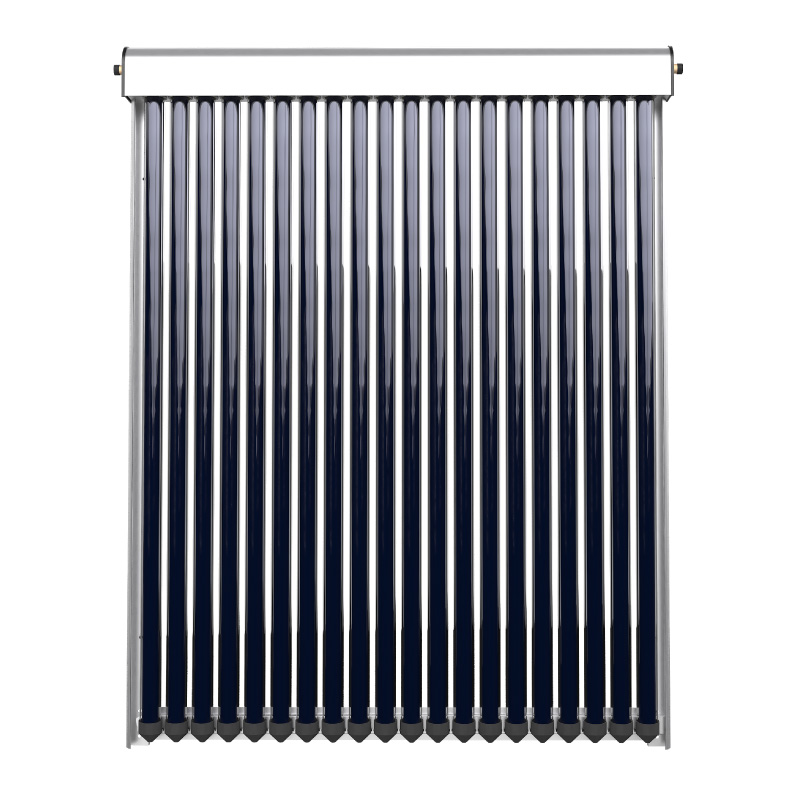
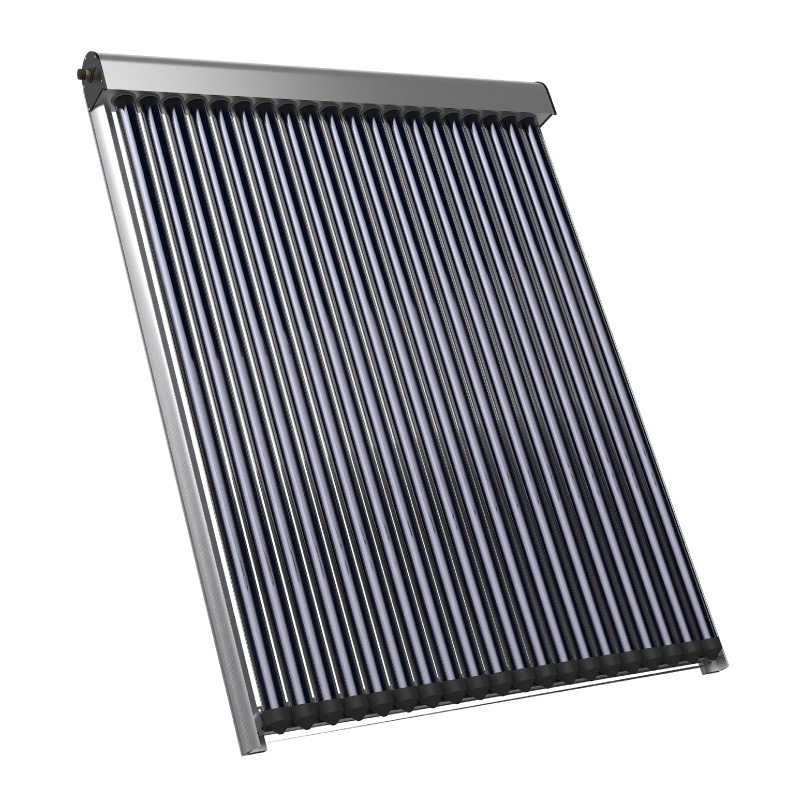
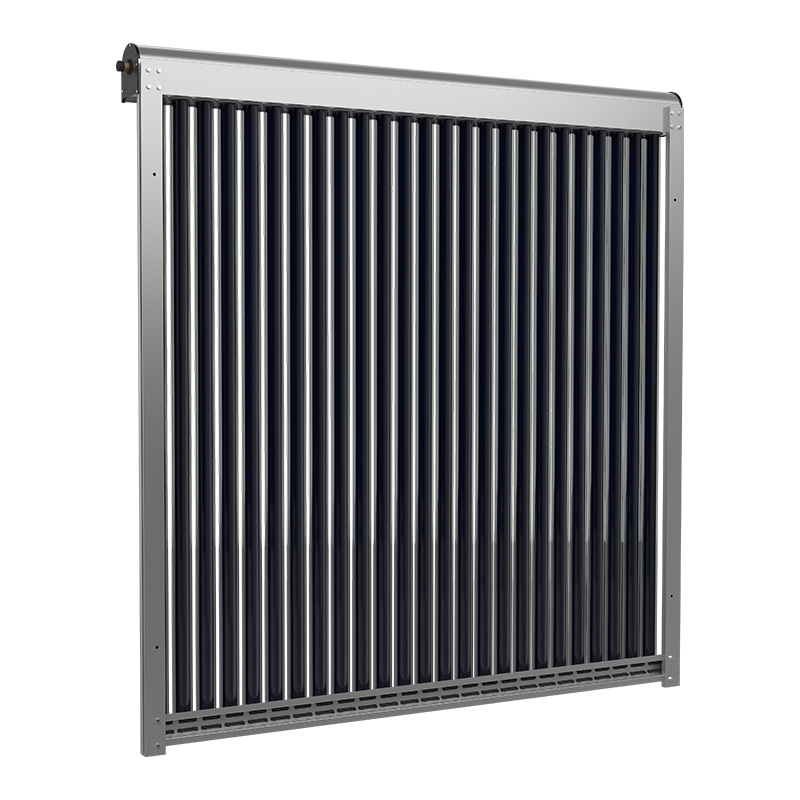
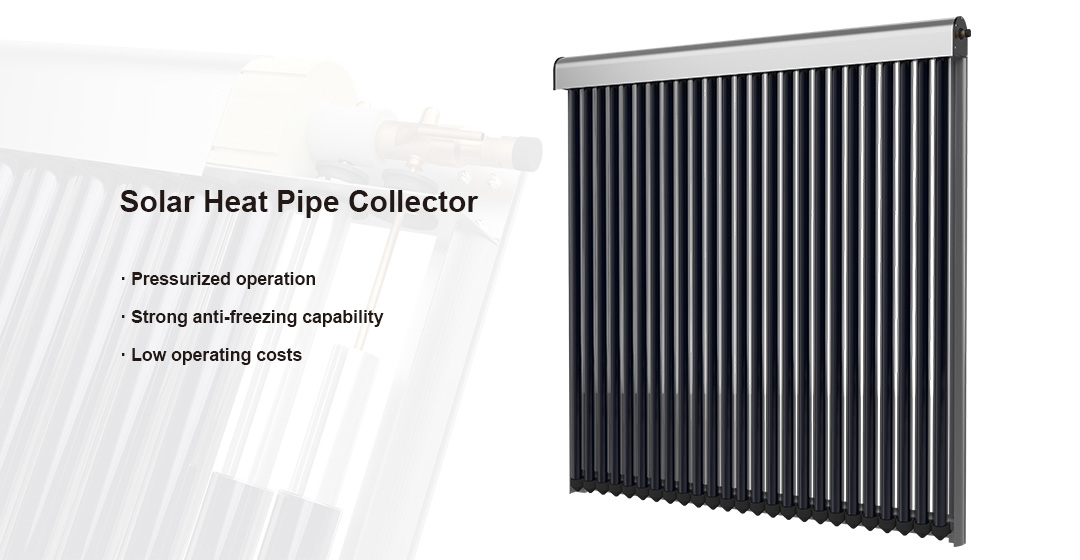
Heat Pipe Collector System
1. Heat pipe thermal conductivity reaches up to 99%
2. Heat transfer begins within 5 seconds after solar exposure
3. 3003 aluminum fins offer strong resistance to corrosion, humidity, and salt fog
4. Built-in thermal diode structure prevents reverse heat loss
5. Winter heat exchange efficiency remains above 55%
6. No scaling or freezing risk even at –50°C
With the rapid restructuring of the global energy system toward carbon neutrality, solar thermal technology is becoming one of the most reliable alternatives to conventional fossil-fuel heating. Among various solar thermal products, the heat pipe solar collector is recognized as a high-efficiency and high-reliability solution, especially for centralized hot water and industrial heat supply.
Unlike traditional solar collectors that rely on direct water circulation inside the tubes, the heat pipe collector transfers heat through a fully sealed phase-change heat pipe system. The internal working fluid continuously completes a cycle of evaporation, heat release, and condensation, enabling extremely fast and efficient thermal transport. This structure fundamentally eliminates the common technical weaknesses of traditional collectors, such as low efficiency at low temperatures, slow start-up, freezing, tube bursting, and high failure rates.
Today, the heat pipe solar collector has become a preferred clean-energy heat source for commercial buildings, public facilities, and industrial thermal systems worldwide.
1. Application Scenarios: Engineered for Centralized Hot Water Projects
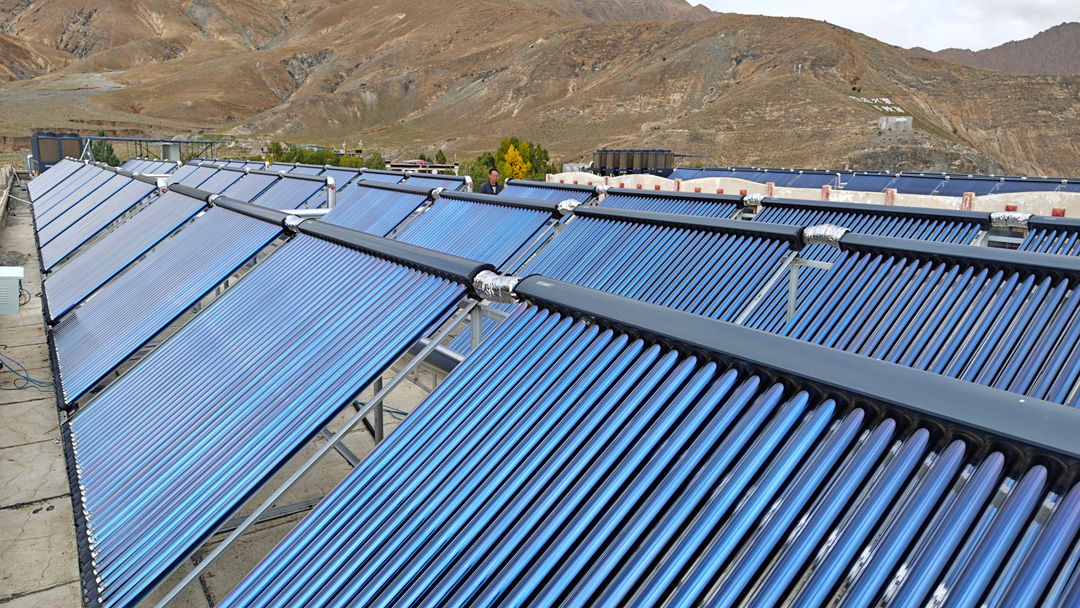
Thanks to its high system stability, flexible installation, and excellent climate adaptability, the heat pipe solar collector is widely applied in various centralized hot water projects, including but not limited to:
· Hotels and hospitality resorts
· School and university dormitory systems
· Hospitals and medical institutions
· Public swimming pools and sports facilities
· Factories, worker dormitories, and large commercial complexes
The system ensures:
· Continuous 24-hour hot water supply in hotels
· High-frequency hot water usage in educational campuses
· Safe and stable sanitary hot water for medical applications
· Constant-temperature heating for public swimming pools
For any scenario that requires long-term, high-load, and stable hot water production, the heat pipe solar collector provides a dependable and energy-efficient solution.
2. Core Technical Strengths That Differentiate Heat Pipe Collectors
2.1 Fully Sealed Heat Transfer Circuit
Long-Term Reliability with Zero Internal Water Circulation
In conventional collectors, water flows directly inside the tubes, which easily leads to leakage, corrosion, scaling, and pressure damage. The heat pipe solar collector adopts a completely sealed heat transfer system, in which only special working fluid exists inside the heat pipe.
This structure offers:
· Complete isolation from external moisture and impurities
· No internal scaling
· No leakage risk
· Strong corrosion resistance
· A service life exceeding 15 years, far beyond that of traditional collectors
As a result, long-term operational stability is significantly improved while maintenance cost is effectively reduced.
2.2 High-Performance Super-Conductive Heat Pipes
Ultra-Fast Start-Up and High Thermal Efficiency
The heat pipe transfers thermal energy through phase-change heat conduction, allowing heat to move at a speed several dozens of times faster than conventional metal conduction.
Key performance advantages include:
· Overall thermal efficiency exceeding 80% under sufficient solar radiation
· Efficiency improvement of 10%–20% compared with conventional evacuated tube collectors
· Heat transfer response time of only 5 seconds
· Stable heat collection even under weak sunlight, cloudy weather, or winter conditions
This guarantees fast system start-up and continuous thermal output throughout the day.
2.3 Pressurized Anti-Freezing Operating Structure
All-Weather Operation from Extreme Cold to High Heat
The collector adopts a “no-water-in-tube” pressurized heat pipe design, eliminating direct water circulation inside the evacuated glass tube. This structure prevents:
· Tube explosion caused by excessive summer heat
· Freezing damage under ultra-low winter temperatures
· Internal pressure instability
· Water leakage and scaling
The system operates stably within a wide ambient temperature range from –50°C to above +40°C, ensuring year-round uninterrupted thermal energy supply, even in alpine, plateau, and high-latitude regions.
2.4 Customized Engineering for Building Integration
Flexible Design for Architectural and Energy-System Compatibility
Collector dimensions, number of tubes, and total collecting area can be tailored according to actual project conditions, including:
· Roof structure and load-bearing requirements
· Installation orientation
· Regional solar radiation resources
· Daily hot water demand
The collector can be installed on:
· Flat roofs
· Sloping roofs
· Building façades
· Integrated architectural canopies
For large commercial buildings, it can also be integrated with photovoltaic modules to form a PV + solar thermal hybrid energy system, greatly improving overall building energy utilization efficiency and reducing long-term operating costs.
3. Technical Specifications
Type of collector | HPC182 | HPC240 | HPC298 | HPC370 | HPC442 | |
outline dimension (mm) | 1025×1920×131 | 1325×1920×131 | 1625×1920×131 | 2000×1920×131 | 2375×1920×131 | |
Vacuum tube specifications | φ58×1800, the outer wall thickness is 2.0mm, and the inner wall thickness is 1.6mm | |||||
fin | 3003 anti-rust aluminum, wall thickness 0.2mm, length 1620mm | |||||
Number of vacuum tubes | 12 | 16 | 20 | 25 | 30 | |
Total area (㎡) | 1.82 | 2.4 | 2.98 | 3.7 | 4.42 | |
Lighting area (㎡) | 1.2 | 1.6 | 2 | 2.5 | 3 | |
net weight (kg) | 42 | 55 | 67 | 85 | 99 | |
Working pressure (MPa) | 0.6MPa | |||||
Interface size | Φ 22 light tubes | |||||
Number of interfaces | Two | |||||
Total heat loss coefficient | 2.453W/(㎡·K) | |||||
Maximum operating temperature (℃) | 120℃ | |||||
Peak efficiency | 0.724 | 0.724 | 0.724 | 0.724 | 0.724 | |
rated efficiency ① | 0.6 | 0.6 | 0.6 | 0.6 | 0.6 | |
specified | 400W/m² | 0.2 | 0.27 | 0.33 | 0.42 | 0.5 |
700W/m² | 0.46 | 0.61 | 0.77 | 0.96 | 1.15 | |
1000W/m² | 0.72 | 0.96 | 1.2 | 1.5 | 1.8 | |
Gas volume (L) | 0.8 | 1.04 | 1.27 | 1.57 | 1.86 | |
4. Performance Advantages in Real Operating Conditions
· Heat pipe thermal conductivity reaches up to 99%
· Heat transfer begins within 5 seconds after solar exposure
· 3003 aluminum fins offer strong resistance to corrosion, humidity, and salt fog
· Built-in thermal diode structure prevents reverse heat loss
· Winter heat exchange efficiency remains above 55%
· No scaling or freezing risk even at –50°C
5. Why Choose Soletks Solar as Your Heat Pipe Collector Partner
Leading Core Technologies
Soletks Solar owns 117 patented technologies and proprietary solutions. It is one of the few manufacturers capable of mass production of both blue selective coatings and black selective coatings, with black coatings accounting for approximately 60% of the domestic Chinese market.
Complete Industrial Chain Layout
With 7 subsidiaries and 6 manufacturing bases, Soletks Solar covers the entire supply chain from raw material processing to solar thermal system integration. The annual capacity of flat-plate clean thermal equipment reaches 7.0 GWth, and flat-plate collector output has ranked second worldwide for two consecutive years.
Intelligent Manufacturing Capability
Advanced automated production lines allow one collector to be completed every 55 seconds, ensuring stable quality, high production efficiency, and reliable delivery timelines.
Global Climate-Oriented Custom Solutions
Soletks Solar provides customized system solutions for:
· High-altitude and ultra-cold regions
· Central and Western European heating applications
· High-humidity tropical and monsoon climates
· Industrial hot water and process heat projects
6. FAQ – Heat Pipe Solar Collectors
Q1: What is a heat pipe solar collector?
It is a high-efficiency solar thermal collector that uses evacuated glass tubes and sealed copper heat pipes to realize rapid phase-change heat transfer.
Q2: How does the heat pipe transfer heat?
The internal working fluid evaporates after absorbing solar energy, rises to the condenser section to release heat to the circulating water, then condenses and flows back by gravity to repeat the cycle.
Q3: Why is it more suitable for cold climates than flat plate collectors?
Vacuum insulation minimizes heat loss, while phase-change heat transfer enables faster thermal response under weak solar radiation and low temperatures.
Q4: Can it operate throughout the year without interruption?
Yes. The antifreeze working fluid and sealed heat pipe structure ensure stable year-round operation even under sub-zero conditions.
Q5: What maintenance does it require?
Only basic routine inspection of pipelines and seals, periodic surface cleaning, and an annual heat exchange performance test are required.
Contact Information
Shandong Soletks Solar Technology Co., Ltd
Brand: Soletks Solar
Email: export@soletksolar.com