Chinese
 Español
 Francés
 Deutsch
 Русский
 العربية
 Português
 日本語
日本語
 한국어
한국어
 Italiano

How to Choose the Right Heat Pipe Solar Collector for Your Project
How to Choose the Right Heat Pipe Solar Collector for Your Project
Selecting the right solar collector can be overwhelming. A wrong choice leads to poor efficiency, wasted money, or system failure. This guide helps you choose the right heat pipe solar collector for your climate, application, and budget.
To choose the right heat pipe solar collector, you must consider location, daily hot water demand, installation angle, material quality, and efficiency ratings. Commercial-grade systems from brands like Soletks Solar offer customizable designs, professional support, and tested durability—making them ideal for residential, commercial, and industrial projects. Proper sizing and specification ensure optimal performance and long-term savings.
Let’s explore the five key areas to evaluate before purchasing or recommending a heat pipe solar collector.
What factors should I consider when choosing a heat pipe solar collector?
Before selecting a system, here are the top considerations:
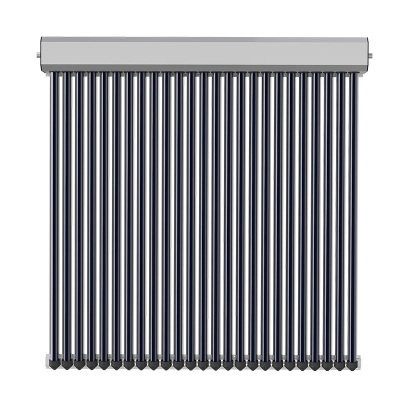
Geographic Location: Your local solar radiation level affects the size and type of collector required. For colder or cloudier climates, evacuated tube systems with heat pipes perform better.
Daily Hot Water Demand: Estimate liters per day needed based on building type (residential, hotel, factory, etc.).
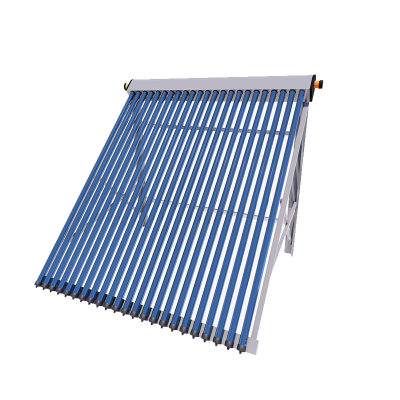
Installation Space and Angle: Heat pipe systems require a tilt angle (usually 25–70°). Ensure roof or ground mounting is feasible.
Budget vs. Performance: Higher-quality materials (like borosilicate glass, copper pipes, selective coatings) cost more but last longer and perform better.
Certifications: Look for SRCC, Solar Keymark, or other local certifications if required in your market.
Also, consider if your project will benefit from a passive thermosiphon system or needs an active pumped loop design.
How do I size a heat pipe solar collector system correctly?
Proper sizing ensures your system delivers enough hot water without overloading or underperforming. Here’s a simple method:
Residential: Estimate 30–50 liters of hot water per person per day.
Hotels: Plan for 50–80 liters per room per day.
Hospitals & Factories: Calculate based on equipment, usage hours, and hygiene needs.
Each heat pipe vacuum tube typically provides 1.5–2.0 kWh/day under full sun. Multiply your total daily thermal demand by the solar insolation factor in your location, and divide by tube output to estimate tube quantity.
Example: A 20-room guesthouse may need 1,000–1,200 liters/day. A 30-tube collector can meet 60–70% of this load, depending on climate.
Pro tip: Always oversize slightly if year-round performance is important.
What’s the difference between heat pipe and U pipe solar collectors?
Both are used in evacuated tube systems but differ in internal heat transfer design:
| Feature | Heat Pipe | U Pipe |
|---|---|---|
| Heat Transfer Method | Phase-change fluid inside sealed copper pipe | Liquid water/glycol flows directly through U-shaped copper pipe |
| Maintenance | Easy to replace individual tubes; no water inside | Harder to maintain; water flows inside the tube |
| Efficiency | High; fast startup, low thermal loss | Good, but slower than heat pipe |
| Freezing Risk | Minimal (dry connection) | Higher (wet connection) |
| Best For | Residential & commercial systems, colder regions | Special projects where direct flow is needed |
Soletks Solar recommends heat pipe evacuated tube collectors for most projects due to better reliability and easier maintenance.
What technical specifications matter most in solar collector selection?
Here are the key specs to check before choosing your heat pipe solar collector:
Absorber Efficiency: Look for absorptivity >92% and emissivity<8%.
Tube Material: Durable borosilicate glass with selective coating performs best.
Heat Pipe: Copper with high-purity working fluid and quick thermal response.
Manifold: High-quality aluminum casing with polyurethane insulation and copper headers.
Pressure Rating: At least 6 bar working pressure for most commercial systems.
Orientation Flexibility: Must support installation at angles from 25° to 70°.
Soletks Solar provides complete technical datasheets for each product model, helping you make an informed decision.
How does Soletks Solar help with collector selection and customization?
At Soletks Solar, we make solar selection simple and reliable:
Project Consultation: Send us your daily demand and location—we’ll suggest the ideal configuration.
Custom Designs: Need OEM branding or unique specs? We provide tailored solutions for distributors and integrators.
Technical Support: Receive 3D CAD drawings, manuals, and system layout diagrams upon request.
Flexible Models: Choose from 10-tube, 20-tube, 30-tube systems based on your market needs.
After-Sales Service: Dedicated team supports installation, training, and warranty claims globally.
We’ve helped hundreds of businesses across Europe, Southeast Asia, the Middle East, and Latin America scale their solar hot water projects successfully with our heat pipe solar collectors.
Conclusion
Choosing the right heat pipe solar collector ensures long-term performance and ROI. Soletks Solar supports you with expert guidance, premium products, and custom designs for any project. Contact us today to get your personalized solar solution.