Chinese
 Español
 Francés
 Deutsch
 Русский
 العربية
 Português
 日本語
日本語
 한국어
한국어
 Italiano

T/PV Pro System Economics: Capital Cost, Operational Revenue & Long-Term Investment Return Analysis
T/PV Pro System Economics: Capital Cost, Operational Revenue & Long-Term Investment Return Analysis
Introduction: Economic Value Proposition of Dual-Output Technology
The economic viability of photovoltaic-thermal (PVT) hybrid systems rests on a fundamental economic proposition distinct from single-output alternatives: generating two distinct energy products (electricity and thermal energy) from the same aperture area enables higher total energy value per unit area of collector installed. This dual-product approach theoretically justifies higher capital costs compared to dedicated single-output systems, provided that the incremental cost does not exceed the incremental revenue benefit. Quantifying this relationship requires rigorous economic analysis encompassing installed system costs, component performance characteristics, utility rate structures, and long-term discount rates appropriate to capital asset evaluation.
Relative to conventional alternatives (grid electricity supplemented by gas boiler heating), a T/PV Pro system typically involves significantly higher capital expenditure offset by reduced operational energy consumption. A residential domestic hot water system sized for 40 to 50 percent thermal load offset might require installation capital of $15,000 to $20,000 (approximately $25 to $35 per watt of thermal output capacity), substantially exceeding conventional gas water heater systems at $1,200 to $1,500. This cost premium must be recovered through annual energy savings and government incentive programs (rebates, tax credits, renewable energy credits) over a payback period typically ranging from 7 to 12 years in favorable climates with supporting incentives.
Capital Cost Analysis: System Component Breakdown
The installed cost of a T/PV Pro system comprises multiple distinct components, each contributing to total installed cost and each negotiable through competitive procurement.
| Component | Unit Quantity | Unit Cost | Component Total |
|---|---|---|---|
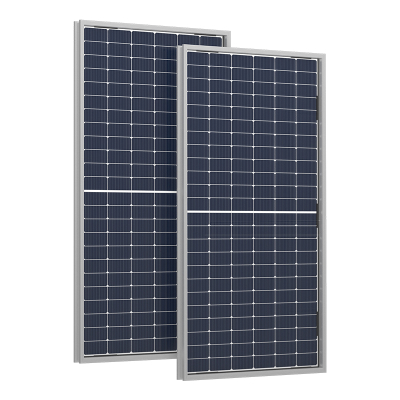
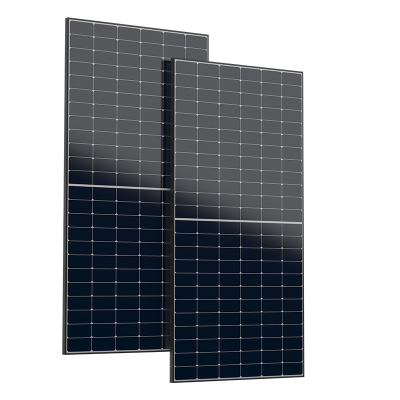
| T/PV Pro Modules | 9 units | $630 | $5,670 |
| Thermal Storage Tank | 1 unit | $3,000 | $3,000 |
| Circulation Pump & Controls | 1 system | $1,500 | $1,500 |
| Piping, Heat Exchanger, Fittings | Materials | - | $2,200 |
| Installation Labor | 40 hours | $75/hour | $3,000 |
| Electrical Interconnect & Inverter | 3 kW capacity | $800 | $2,400 |
| Total Installed Cost | - | - | $17,770 |
Operational Revenue Analysis: Thermal and Electrical Outputs
The annual revenue generated by a T/PV Pro system derives from two distinct mechanisms: avoided thermal energy costs and avoided electrical energy costs.
A 5-kilowatt thermal system installed in a location with average annual solar irradiance of 1350 kWh/m²·a and system thermal efficiency averaging 50 percent would be expected to deliver approximately 5 to 5.5 MWh annually. Avoiding 5.5 MWh of useful heat offsets approximately 6.5 MWh of natural gas consumption in an 85 percent efficient boiler. At typical end-user European natural gas equivalent prices of $40 to $90 per megawatt-hour, this avoidance generates approximately $260 to $585 annually.
The same system generates approximately 3.5 to 4 MWh of electrical energy annually. At residential electricity rates of $0.12 to $0.20 per kilowatt-hour, this yields $420 to $800 annually; net-metered export may yield $245 to $480 annually.
Combined avoided-cost value: $680 to $1,385 annually, with electricity contributing 60 to 75 percent of the total.
Return on Investment
Simple payback is approximately 16.9 years without incentives and 11.4 to 13.3 years with incentives applied. A 25-year NPV analysis at a 3 percent discount rate yields positive net present value under most high-electricity-price scenarios.
Conclusion
T/PV Pro system economics are context-dependent and strongest where high electricity prices, concurrent thermal demand, and long-term ownership align. The dual-output architecture provides structural advantage where these conditions are met.