Chinese
 Español
 Francés
 Deutsch
 Русский
 العربية
 Português
 日本語
日本語
 한국어
한국어
 Italiano

Why Are Heat Pipe Solar Water Heaters Important?
Why Are Heat Pipe Solar Water Heaters Important?
A Comprehensive Guide to Benefits and Selection
Introduction: The Rising Importance of Heat Pipe Solar Water Heaters
An increasing number of homeowners and businesses are transitioning from conventional electric water heaters to heat pipe solar water heaters. This shift represents more than just a trend—it reflects a fundamental change in how we approach energy consumption, environmental responsibility, and long-term financial planning.
Water heating represents approximately 17% of typical household energy consumption, making it one of the largest energy expenses for most families.
Traditional water heating methods rely heavily on fossil fuels or electricity generated from non-renewable sources, contributing significantly to carbon emissions and environmental degradation. Heat pipe solar water heaters offer a compelling alternative that addresses both economic and environmental concerns.
Shandong Soletks Solar Technology Co., Ltd., as a leading manufacturer of solar thermal solutions, has witnessed firsthand the transformative impact of heat pipe technology on residential and commercial water heating applications. This comprehensive guide explores why heat pipe solar water heaters have become increasingly important and provides practical guidance for selecting the right system for your needs.
What Are Heat Pipe Solar Water Heaters?
Heat pipe solar water heaters utilize advanced thermal transfer technology to convert solar radiation into usable hot water. Unlike traditional direct-flow systems, heat pipe collectors employ sealed copper pipes containing a small amount of heat transfer fluid that vaporizes at low temperatures.
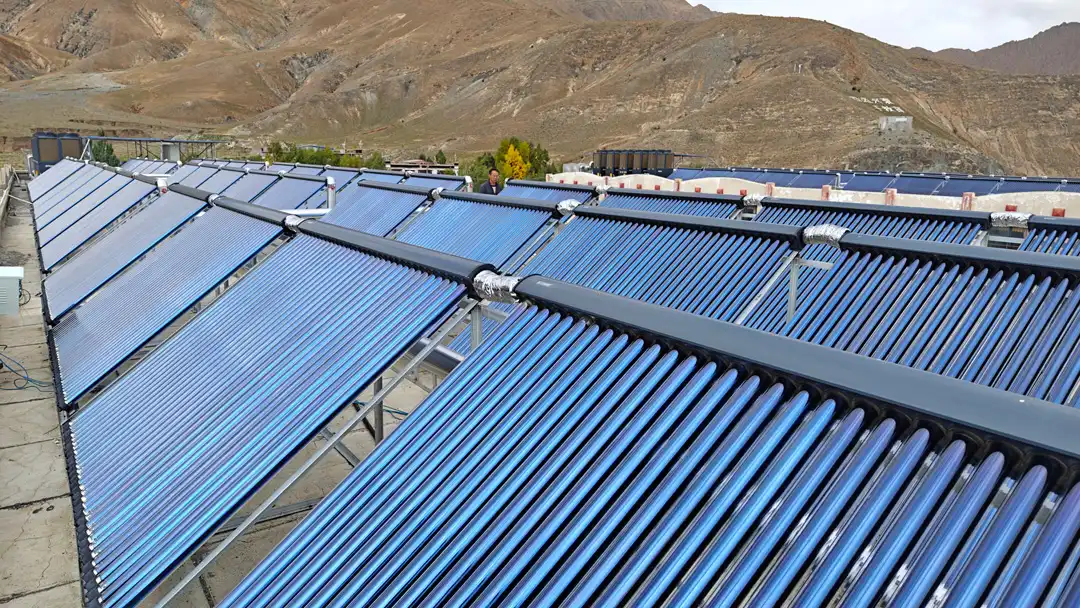
Advanced heat pipe solar water heating system with integrated storage tank
How Heat Pipe Technology Works
The heat pipe mechanism operates through a continuous evaporation-condensation cycle:
Solar Absorption
Solar radiation heats the absorber plate, which transfers thermal energy to the heat pipe
Vapor Phase Transfer
The heat transfer fluid inside the sealed pipe vaporizes and rises to the condenser
Heat Exchange
The vapor condenses at the heat exchanger, releasing thermal energy to the water
Liquid Return
The condensed fluid returns to the bottom of the pipe through gravity, ready to repeat the cycle
This passive thermal transfer process requires no pumps or external power, making heat pipe systems exceptionally reliable and efficient.
The Critical Advantages of Heat Pipe Solar Water Heaters
1. Combating Climate Change Through Reduced Carbon Emissions
Water heating accounts for a substantial portion of household energy consumption, with many homes relying on natural gas or other fossil fuels. This dependence results in significant carbon dioxide emissions entering the atmosphere daily.
Environmental Impact Data
| Energy Source | CO₂ Emissions (kg/year) | Equivalent Trees Needed |
|---|---|---|
| Natural Gas Water Heater | 1,800-2,200 | 90-110 trees |
| Electric Water Heater (Coal-powered) | 2,400-3,000 | 120-150 trees |
| Heat Pipe Solar Water Heater | 200-400 | 10-20 trees |
Transitioning to heat pipe solar water heaters represents one of the most effective individual actions homeowners can take to reduce their carbon footprint. By harnessing renewable solar energy, these systems eliminate the need for fossil fuel combustion, directly contributing to climate change mitigation efforts.
2. Protecting Air Quality and Public Health
More than one-third of electricity generation in many regions comes from coal-fired power plants. The combustion process releases particulate matter, sulfur dioxide, nitrogen oxides, and other pollutants that severely impact air quality.
Health Impacts of Traditional Water Heating:
- Respiratory illnesses from particulate matter exposure
- Cardiovascular complications from air pollution
- Increased asthma rates, particularly in children
- Premature mortality associated with long-term exposure
When you install a heat pipe solar water heating system, you actively participate in solving these public health challenges. Each system installed reduces the demand for electricity from fossil fuel sources, contributing to cleaner air for your community.
3. Safeguarding Water Quality from Toxic Pollutants
Carbon emissions and particulate matter represent only part of the environmental burden of fossil fuel combustion. The Natural Resources Defense Council has identified power plants as the primary source of mercury and other toxic heavy metals released into the environment annually.
Water Contamination Pathway:
- Power plants emit mercury through smokestack emissions
- Mercury deposits into waterways through atmospheric deposition
- Aquatic organisms absorb mercury, which bioaccumulates through the food chain
- Human consumption of contaminated fish poses serious health risks
Heat pipe solar water heaters offer a practical solution to interrupt this pollution cycle. By reducing electricity demand from coal-fired plants, these systems help protect rivers, streams, and lakes from mercury contamination.
4. Achieving Substantial Monthly Cost Savings
Heat pipe solar water heaters can provide 60-80% of hot water demand, even in temperate climates with moderate solar radiation. This translates into significant utility bill reductions month after month.
Financial Performance Comparison
| System Type | Monthly Energy Cost | Annual Cost | 20-Year Total Cost |
|---|---|---|---|
| Electric Water Heater | $45-65 | $540-780 | $10,800-15,600 |
| Natural Gas Water Heater | $30-45 | $360-540 | $7,200-10,800 |
| Heat Pipe Solar Water Heater | $8-15 | $96-180 | $1,920-3,600 |
Return on Investment Analysis
Heat pipe solar water heating systems typically recover their initial investment in 4-8 years, depending on local energy costs and available incentives. With an expected lifespan of 25-40 years, these systems provide decades of virtually free hot water after the payback period.
For commercial applications, the savings multiply proportionally with hot water demand. Hotels, hospitals, industrial facilities, and multi-family residential buildings can achieve even faster payback periods due to their higher consumption volumes.
5. Increasing Property Value and Market Appeal
Real estate studies consistently demonstrate that homes equipped with solar hot water systems sell faster and command higher prices than comparable properties without solar features.
Property Value Impact:
- Average home value increase: 3-5%
- Reduced time on market: 15-25% faster sales
- Enhanced appeal to environmentally conscious buyers
- Differentiation in competitive real estate markets
Adding a heat pipe solar water heater represents an investment that provides returns whether you remain in your home or decide to sell. The combination of lower operating costs and environmental benefits creates compelling value for prospective buyers.
Key Considerations When Selecting a Heat Pipe Solar Water Heater

High-efficiency heat pipe evacuated tube collectors with advanced coating technology
Anti-Scaling Technology and Tank Protection
Scale formation—the accumulation of mineral deposits inside the storage tank—represents one of the primary challenges in water heating systems. Hard water areas with high calcium and magnesium content are particularly susceptible to scaling issues.
Scale Prevention Features to Look For:
- Rotating Water Flow Design: Some manufacturers incorporate circulation patterns that promote mineral deposit settlement at the tank bottom, away from heating elements
- Magnesium Anode Rods: Sacrificial anodes protect the tank interior from corrosion while minimizing scale adhesion
- Glass-Lined or Enamel-Coated Tanks: Provide smooth interior surfaces that resist scale buildup
- Periodic Flushing Capabilities: Easy-access drain valves facilitate regular maintenance
While anti-scaling features provide benefits, they shouldn't be the sole determining factor. A comprehensive warranty covering the tank and heating elements for 10-12 years typically indicates quality construction with adequate scale protection.
Drain Valve Material and Durability
The drain valve, located near the bottom of the storage tank, serves a critical maintenance function. This component allows you to flush sediment and mineral deposits from the tank, extending system lifespan and maintaining efficiency.
Material Comparison
| Material | Durability | Corrosion Resistance | Typical Lifespan | Cost |
|---|---|---|---|---|
| Plastic | Low | Moderate | 3-5 years | Low |
| Brass | High | Excellent | 15-25 years | Moderate |
| Stainless Steel | Very High | Excellent | 20-30 years | High |
Recommendation: Prioritize systems with brass or stainless steel drain valves. While plastic valves reduce initial costs, they frequently fail prematurely, potentially causing water damage and requiring expensive repairs.
Digital Display and Monitoring Capabilities
Modern heat pipe solar water heaters increasingly incorporate digital monitoring systems that provide real-time performance data and operational control.
Tank Temperature Monitoring
Displays current water temperature and allows temperature setpoint adjustment
Collector Temperature Tracking
Shows solar collector temperature to verify proper operation
System Pressure Readings
Monitors pressure in closed-loop systems to detect leaks or component failures
Energy Production Metrics
Calculates daily and cumulative solar energy contribution
Vacation Mode Settings
Optimizes operation during extended absences to maximize efficiency
Advanced Control Options
Some premium systems offer smartphone connectivity, allowing remote monitoring and control. These features prove particularly valuable for commercial installations where facility managers need to track multiple systems across different locations.
System Sizing and Capacity Determination
Proper system sizing ensures adequate hot water supply while optimizing cost-effectiveness. Undersized systems fail to meet demand, while oversized systems waste money on unnecessary capacity.
Residential Sizing Guidelines
| Household Size | Daily Hot Water Demand | Recommended Collector Area | Storage Tank Capacity |
|---|---|---|---|
| 1-2 people | 80-120 liters | 2-3 m² | 100-150 liters |
| 3-4 people | 150-200 liters | 4-5 m² | 200-300 liters |
| 5-6 people | 220-280 liters | 5-6 m² | 300-400 liters |
| 7+ people | 300+ liters | 6-8 m² | 400-500 liters |
Commercial Sizing Considerations
Commercial applications require detailed analysis of:
- Peak demand periods and hot water usage patterns
- Simultaneous usage factors
- Backup heating capacity requirements
- Available roof or ground space for collector installation
For large-scale commercial projects, consider our 25 Engineering Header Collectors, specifically designed for high-capacity applications.
Cost Estimation and Energy Efficiency Analysis
Understanding the total cost of ownership requires analyzing both initial investment and long-term operational expenses.
Cost Components:
- Equipment Costs: Collectors, storage tank, heat exchanger, mounting hardware
- Installation Costs: Labor, plumbing modifications, electrical connections
- Permit and Inspection Fees: Local regulatory compliance costs
- Maintenance Costs: Annual inspections, fluid replacement (if applicable), component repairs
Energy Efficiency Metrics:
- Solar Fraction: Percentage of hot water demand met by solar energy (target: 60-80%)
- System Efficiency: Overall conversion efficiency from solar radiation to usable hot water
- Payback Period: Time required to recover initial investment through energy savings
- Lifecycle Cost Analysis: Total cost over expected system lifespan compared to alternatives
Local Regulations, Incentives, and Building Codes
Before purchasing and installing a heat pipe solar water heating system, research applicable regulations and available financial incentives.
Regulatory Considerations
- Building Permits: Most jurisdictions require permits for solar water heater installation
- Plumbing Codes: Systems must comply with local plumbing standards
- Electrical Requirements: Backup heating elements must meet electrical codes
- HOA Restrictions: Homeowners associations may have aesthetic or placement requirements
Financial Incentives
- Federal Tax Credits: Many countries offer tax incentives for renewable energy systems
- State and Local Rebates: Regional programs may provide cash rebates or performance incentives
- Utility Company Programs: Some utilities offer rebates for reducing peak demand
- Green Building Certifications: LEED and other programs provide credits for solar thermal systems
Understanding System Components and Configuration
A complete heat pipe solar water heating system comprises several integrated components, each serving specific functions.
Essential System Components:
- Heat Pipe Solar Collectors: The primary solar energy capture device
- Storage Tank: Insulated vessel for hot water storage
- Heat Exchanger: Transfers thermal energy from collector to water (in indirect systems)
- Circulation System: Pumps and controls for active systems
- Backup Heating: Electric or gas auxiliary heater for periods of insufficient solar radiation
- Temperature Controls: Thermostats and sensors for system regulation
- Safety Devices: Pressure relief valves, expansion tanks, and overheat protection
Heat Pipe Solar Water Heaters vs. Alternative Technologies
Comparison with Evacuated Tube Collectors
While heat pipe technology represents a specific type of evacuated tube collector, important distinctions exist between heat pipe systems and direct-flow evacuated tube designs.
Heat Pipe Advantages
- Individual tube replacement without draining the system
- Dry connection prevents freezing damage
- Operates efficiently even with partial tube failure
- Ideal for freeze-prone climates
Direct-Flow Evacuated Tube Advantages
- Lower initial cost
- Simpler design with fewer components
- Suitable for mild climates without freezing concerns
For a detailed comparison, explore our complete range of Evacuated Tube Solar Collectors.
Comparison with Flat Plate Collectors
Flat plate solar collectors represent the traditional solar thermal technology, offering different performance characteristics compared to heat pipe systems.
Performance Comparison
| Feature | Heat Pipe Collectors | Flat Plate Collectors |
|---|---|---|
| Low Temperature Efficiency | Excellent | Good |
| High Temperature Efficiency | Good | Excellent |
| Freeze Protection | Excellent | Requires antifreeze |
| Wind Resistance | Excellent | Good |
| Installation Flexibility | High | Moderate |
| Maintenance Requirements | Low | Moderate |
| Initial Cost | Moderate-High | Low-Moderate |
Application Recommendations:
- Heat Pipe Systems: Ideal for cold climates, retrofit applications, and situations requiring individual tube replacement
- Flat Plate Systems: Optimal for mild climates, large commercial installations, and applications requiring high-temperature output
Learn more about which system is better for your specific needs.
Installation Considerations and Best Practices
Optimal Collector Placement
Proper collector orientation and tilt angle significantly impact system performance.
Orientation Guidelines
- Northern Hemisphere: Face collectors true south (not magnetic south)
- Southern Hemisphere: Face collectors true north
- Acceptable Deviation: Within 15° of true south/north maintains 95%+ performance
Tilt Angle Optimization
- Year-Round Use: Set tilt angle equal to latitude
- Winter Optimization: Add 10-15° to latitude angle
- Summer Optimization: Subtract 10-15° from latitude angle
Shading Analysis
Even partial shading dramatically reduces solar collector performance. Conduct thorough shading analysis before installation.
Shading Assessment Methods:
- Solar Pathfinder: Physical device that projects sun paths throughout the year
- Software Analysis: Computer programs that model shading based on location and obstructions
- Seasonal Observation: Monitor potential installation site throughout different seasons
Minimum Requirements: Collectors should receive unobstructed sunlight from 9 AM to 3 PM during winter months for optimal performance.
Professional Installation vs. DIY
While some homeowners possess the skills for DIY installation, professional installation offers significant advantages.
Professional Installation Benefits
- Warranty protection (many manufacturers require professional installation)
- Code compliance assurance
- Proper system sizing and component selection
- Leak-free plumbing connections
- Optimized performance through proper setup
DIY Considerations
- Requires plumbing, electrical, and roofing skills
- May void manufacturer warranties
- Potential code violations if not properly executed
- Safety risks from working at heights and with pressurized systems
Maintenance Requirements for Long-Term Performance
Annual Inspection Checklist
Regular maintenance ensures optimal performance and extends system lifespan.
Annual Maintenance Tasks:
- Visual Inspection: Check collectors for damage, leaks, or degradation
- Fluid Level Check: Verify proper heat transfer fluid levels (closed-loop systems)
- Pressure Testing: Confirm system pressure within specified range
- Temperature Verification: Ensure collectors and tank reach appropriate temperatures
- Valve Operation: Test pressure relief and isolation valves
- Insulation Inspection: Check pipe insulation for damage or deterioration
- Controller Function: Verify proper operation of pumps and controls
Long-Term Maintenance Considerations
Every 3-5 Years
- Replace heat transfer fluid in closed-loop systems
- Inspect and replace sacrificial anode rods
- Flush storage tank to remove sediment accumulation
- Check and tighten all plumbing connections
Every 10-15 Years
- Inspect collector absorber surfaces for degradation
- Replace pumps and controllers as needed
- Evaluate overall system performance and consider upgrades
For commercial installations, our Solar Hot Water Systems include comprehensive maintenance programs to ensure long-term reliability.
Environmental Impact: Quantifying the Benefits
Carbon Footprint Reduction
A typical residential heat pipe solar water heater prevents 1.5-2.5 tons of CO₂ emissions annually, depending on the replaced energy source and system size.
Lifetime Environmental Impact:
Over a 25-year lifespan, a single residential system prevents:
- 37.5-62.5 tons of CO₂ emissions
- Equivalent to planting 1,875-3,125 trees
- Equivalent to taking a car off the road for 4-7 years
Resource Conservation
Beyond carbon emissions, heat pipe solar water heaters conserve finite natural resources.
Annual Resource Savings (per residential system):
- Natural gas: 200-300 therms (21-31 GJ)
- Electricity: 2,500-4,000 kWh
- Coal (if electricity from coal): 2,000-3,200 kg
- Water (cooling water for power plants): 15,000-25,000 liters
Contribution to Renewable Energy Goals
Many regions have established renewable energy targets and carbon reduction commitments. Widespread adoption of heat pipe solar water heaters contributes significantly to achieving these goals.
Scaling Impact:
If just 10% of households in a city of 1 million people installed heat pipe solar water heaters:
- Annual CO₂ reduction: 37,500-62,500 tons
- Equivalent to removing 8,000-13,000 cars from roads
- Significant progress toward municipal climate action plans
Economic Analysis: Understanding the Full Financial Picture
Initial Investment Breakdown
Typical Residential System Costs (200-300 liter capacity)
| Component | Cost Range |
|---|---|
| Heat Pipe Collectors | $800-1,500 |
| Storage Tank | $400-800 |
| Mounting Hardware | $200-400 |
| Plumbing Materials | $150-300 |
| Electrical Components | $100-200 |
| Professional Installation | $800-1,500 |
| Total System Cost | $2,450-4,700 |
Available Incentives:
- Federal tax credits: 26-30% of system cost
- State rebates: $200-1,000
- Utility incentives: $100-500
- Net Cost After Incentives: $1,500-3,500
Operating Cost Comparison
20-Year Total Cost of Ownership
| System Type | Initial Cost | Energy Costs (20 years) | Maintenance | Total Cost |
|---|---|---|---|---|
| Electric Water Heater | $800-1,200 | $10,800-15,600 | $400-800 | $12,000-17,600 |
| Gas Water Heater | $1,000-1,500 | $7,200-10,800 | $600-1,200 | $8,800-13,500 |
| Heat Pipe Solar (after incentives) | $1,500-3,500 | $1,920-3,600 | $800-1,500 | $4,220-8,600 |
Net Savings: $4,200-13,380 over 20 years compared to conventional systems.
Commercial Applications: Amplified Returns
Commercial facilities with high hot water demands achieve even more impressive financial returns.
Example: 100-Room Hotel
- Daily hot water demand: 10,000-15,000 liters
- Annual conventional heating cost: $25,000-40,000
- Solar system investment: $80,000-120,000
- Annual solar energy savings: $18,000-30,000
- Payback period: 3-5 years
- 25-year net savings: $370,000-630,000
For large-scale commercial projects, explore our Commercial Flat Plate Solar Collector series designed for high-capacity applications.
Real-World Applications and Case Studies
Residential Installation: Suburban Family Home
Project Details:
- Location: Temperate climate zone
- Household: 4 people
- System: 5 m² heat pipe collectors, 300-liter storage tank
- Installation cost: $3,200 (after incentives)
Results:
- Solar fraction: 72% annual hot water demand
- Annual energy savings: $520
- Payback period: 6.2 years
- CO₂ reduction: 2.1 tons annually
Commercial Installation: Boutique Hotel
Project Details:
- Location: Coastal region
- Facility: 45-room hotel
- System: 40 m² collector array, 3,000-liter storage with backup boiler
- Installation cost: $65,000
Results:
- Solar fraction: 65% annual hot water demand
- Annual energy savings: $14,200
- Payback period: 4.6 years
- CO₂ reduction: 32 tons annually
- Guest satisfaction increase due to sustainability features
For hotel applications, our Solar Hot Water Systems for hotels and large facilities provide turnkey solutions.
Industrial Installation: Food Processing Facility
Project Details:
- Location: Agricultural region
- Facility: Dairy processing plant
- System: 120 m² collector array, 10,000-liter storage, integrated with process heating
- Installation cost: $185,000
Results:
- Solar fraction: 55% of process hot water demand
- Annual energy savings: $38,000
- Payback period: 4.9 years
- CO₂ reduction: 85 tons annually
- Enhanced sustainability credentials for product marketing
Future Trends in Heat Pipe Solar Water Heating Technology
Advanced Materials and Coatings
Ongoing research focuses on improving absorber coatings to enhance efficiency across broader temperature ranges.
Emerging Technologies:
- Nanostructured Coatings: Improve solar absorption while reducing thermal emissivity
- Self-Cleaning Surfaces: Reduce maintenance requirements through hydrophobic coatings
- Enhanced Vacuum Technology: Improved vacuum retention for longer service life
Smart System Integration
Modern heat pipe solar water heaters increasingly incorporate intelligent controls and connectivity.
Smart Features:
- Predictive Heating: Machine learning algorithms optimize backup heating based on weather forecasts and usage patterns
- Grid Integration: Coordinate with utility demand response programs
- Remote Diagnostics: Cloud-based monitoring enables proactive maintenance
- Home Automation Integration: Seamless integration with smart home ecosystems
Hybrid System Optimization
Combining heat pipe solar collectors with complementary technologies maximizes performance and reliability.
Hybrid Configurations:
- Solar + Heat Pump: Thermodynamic solar systems combine solar thermal with heat pump technology
- Solar + Condensing Boiler: High-efficiency backup heating for commercial applications
- Solar + Thermal Storage: Phase-change materials extend solar energy availability
Common Misconceptions About Heat Pipe Solar Water Heaters
"Solar water heaters don't work in cold climates"
"Solar water heaters are too expensive"
"Solar water heaters require constant maintenance"
"You need perfect weather for solar water heating"
"Solar water heaters are only for environmentalists"
Conclusion: Making the Smart Investment in Heat Pipe Solar Water Heating
Heat pipe solar water heaters represent a mature, proven technology that delivers compelling benefits across environmental, economic, and practical dimensions. As energy costs continue rising and climate concerns intensify, the importance of these systems will only increase.
Key Takeaways:
- Environmental Impact: Significantly reduce carbon emissions, air pollution, and water contamination
- Economic Benefits: Achieve substantial energy cost savings with 4-8 year payback periods
- Property Value: Increase home value and market appeal
- Technology Maturity: Reliable, well-established technology with 25-40 year lifespan
- Versatile Applications: Suitable for residential, commercial, and industrial installations
Before You Buy:
- Conduct thorough research on system sizing and configuration
- Obtain multiple quotes from qualified installers
- Investigate available incentives and financing options
- Verify local code requirements and permit procedures
- Choose quality components with comprehensive warranties
Ready to Make the Switch?
If you're looking for cost-effective, safe, and reliable heat pipe solar water heaters, Shandong Soletks Solar Technology Co., Ltd. offers comprehensive solutions backed by years of manufacturing expertise and customer satisfaction.
Our product range includes:
- Heat Pipe Solar Collectors for residential and commercial applications
- Complete Solar Hot Water Systems with integrated components
- Engineering solutions for large-scale projects
Contact us today to discuss your hot water needs and receive a customized solution proposal. Our technical team will help you select the optimal system configuration for your specific application, climate, and budget.