Chinese
 Español
 Francés
 Deutsch
 Русский
 العربية
 Português
 日本語
日本語
 한국어
한국어
 Italiano

Solar Heating Project of Changhong Intelligent Industrial Park
Against the backdrop of the global energy structure shifting toward clean and low-carbon development, Sichuan Changhong has actively responded to China's "dual-carbon" strategy and deeply integrated the concept of green development into the process of industrial layout adjustment. In 2020, the Solar Heating Project of Changhong Intelligent Industrial Park, located in Mianyang, Sichuan Province, was officially launched. It has injected green vitality into the park's operation with an innovative energy solution and become a vivid practice for the enterprise to pursue sustainable development.
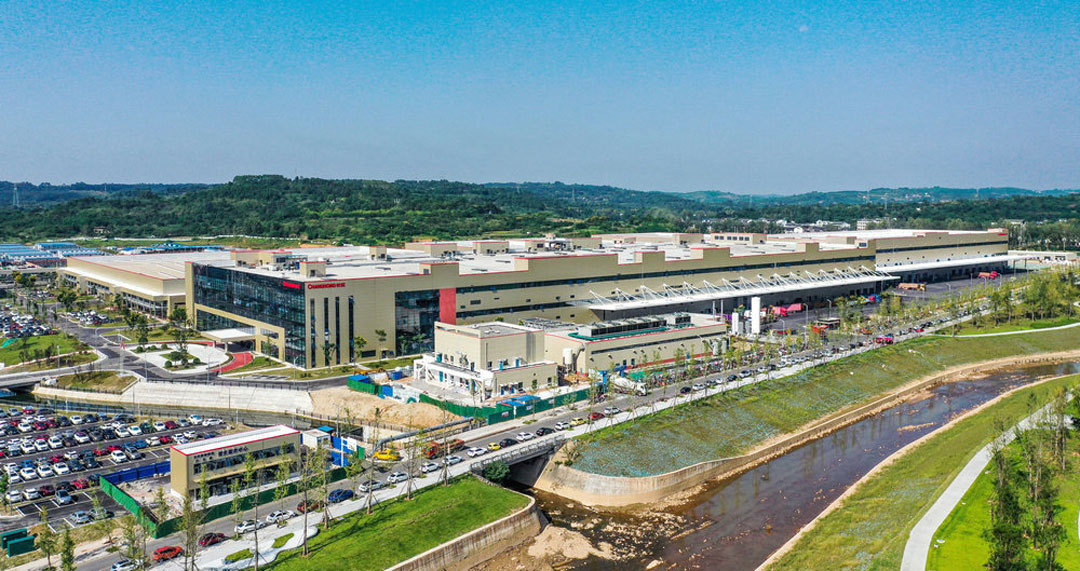
As the core base for Changhong's industrial development, Mianyang, Sichuan Province, its intelligent industrial park bears significant strategic significance. This industrial park is a key part of Changhong's comprehensive implementation of the industrial layout adjustment strategy. It covers multiple functional sectors including the Economic Development Zone Industrial Park, Intelligent Manufacturing Industrial Park, and National Mass Entrepreneurship and Innovation Industrial Park, forming a full-industry-chain intelligent manufacturing technology park pattern. With the continuous expansion of the park's scale and the steady increase in the number of people settling in, the demand for hot water supply in office and dormitory areas has been growing. Traditional heating methods are not only high in energy consumption and cost but also inconsistent with the park's green development positioning. Therefore, the introduction of an efficient and clean solar heating system has become an inevitable choice.
Based on the actual needs of the park, the Solar Heating Project of Changhong Intelligent Industrial Park takes "meeting the daily hot water demand of the park and reducing energy consumption" as its core goals. It is designed with a daily hot water supply capacity of 138 tons, fully covering all office areas and staff dormitories in the industrial park, and providing stable and comfortable hot water services for thousands of staff in the park. Whether it is for hand washing and cleaning needs in daily office work or domestic hot water needs in staff dormitories, this project can accurately meet the requirements, greatly improving the park's operation quality and the living experience of the staff.
In terms of the selection of core equipment, after multiple inspections and strict screenings, the project finally selected the engineering flat-plate solar collectors provided by SOLETKS Group, and the technical strength and product advantages of SOLETKS Group have become the core support for the efficient operation of the project. As a leading enterprise in China's solar thermal utilization field, SOLETKS Group has profound accumulation in technological R&D — its independently developed engineering flat-plate solar collectors adopt advanced selective absorption coating technology, with a heat absorption efficiency 8%-12% higher than the industry average. They can capture solar radiation more fully, and even in Mianyang where the light intensity is relatively weak and there are many rainy days in autumn and winter, they can still maintain a stable heat collection effect to ensure the continuous supply of hot water. In terms of product quality, SOLETKS Group has established a full-process quality control system. The core components of the collectors are made of high-strength corrosion-resistant aluminum alloy frames and ultra-white tempered glass. Their wind pressure resistance and hail resistance performance meet the national first-class standards, enabling them to easily cope with the changeable climate in Mianyang, effectively reducing equipment failures and maintenance costs. The designed service life of the equipment is more than 15 years, far exceeding the conventional level of the industry. In addition, SOLETKS Group also provides customized technical solutions and full-cycle services. According to the architectural layout and hot water demand characteristics of Changhong Intelligent Industrial Park, its professional team optimizes the installation angle and arrangement plan of the collectors through 3D simulation modeling, realizing the harmonious unity of the collectors with the appearance of the park's workshops and dormitory buildings. At the same time, after the project is launched, it provides 24/7 operation and maintenance response services to ensure the long-term stable operation of the system. It can be said that the technical, quality and service advantages of SOLETKS Group have laid a solid foundation for the successful implementation of the project.
The successful implementation of the Solar Heating Project of Changhong Intelligent Industrial Park has not only provided a stable and efficient hot water supply guarantee for the park, improved the office and living environment of the park, but also played an important role in energy conservation and environmental protection. By making full use of solar energy, a clean and renewable energy source, and relying on the high-performance equipment of SOLETKS Group to replace the traditional heating methods using fossil energy, the project can reduce the consumption of about 300 tons of standard coal and reduce carbon dioxide emissions by nearly 800 tons every year. It has made an important contribution to Changhong's achievement of the "dual-carbon" goals and also provided a replicable example of "enterprise cooperation + technology implementation" for the application of green energy in domestic industrial parks. In the future, Changhong will continue to take green development as its orientation, and looks forward to deepening cooperation with excellent partners such as SOLETKS Group, exploring more clean and efficient energy solutions in the process of industrial layout adjustment, and promoting the sustainable development of enterprises and the industry to a new level.