Chinese
 Español
 Francés
 Deutsch
 Русский
 العربية
 Português
 日本語
日本語
 한국어
한국어
 Italiano

Guizhou Zhongye Tobacco Drying Project
In the entire tobacco production chain, the drying process directly determines the quality of tobacco leaves, as well as the environmental friendliness and economic efficiency of production. In 2022, Guiyang, Guizhou – a "high-quality flue-cured tobacco producing area in China" – introduced the Guizhou Zhongye Tobacco Drying System. By replacing the traditional coal-fired mode with air-source heat pump technology, this system solved the long-standing pollution problem in the industry. With its characteristics of "high efficiency, stability, and low energy consumption", it has become a benchmark for the modernization and upgrading of the tobacco drying industry in Southwest China.
Guiyang, Guizhou has a subtropical humid climate, with an average annual temperature of around 15°C and soil rich in potassium and phosphorus, making it an important national flue-cured tobacco base. However, before the Zhongye project was launched, the local area had long relied on traditional coal-fired tobacco curing barns: coal was used as fuel, and the temperature was adjusted manually. This mode had multiple drawbacks – the combustion of coal emitted carbon monoxide and sulfur dioxide, endangering the health of tobacco farmers and worsening air pollution, which was contrary to Guiyang's positioning of "ecological priority"; the accuracy of manual temperature control was low, with temperature fluctuations exceeding ±5°C, leading to uneven drying of tobacco leaves, damaged quality, and affected purchase prices; each curing barn required dedicated personnel to be on duty 24 hours a day, with an average daily input of 3-4 working hours, resulting in high labor costs.
To address these shortcomings, the Guizhou Zhongye team, after research and demonstration, launched the air-source heat pump tobacco drying system in 2022. Its core principle is to absorb low-grade heat energy from the air, convert it into high-grade heat energy through a compressor, and then deliver constant-temperature hot air through a circulating air duct to achieve uniform drying of tobacco leaves, fundamentally reconstructing the energy supply logic.
Simplicity of operation and labor savings are the most intuitive experiences for tobacco farmers. Traditional curing barns relied on experience for temperature adjustment, which easily damaged the quality of tobacco leaves; the Zhongye system is equipped with an intelligent touch panel. Tobacco farmers only need to select the drying program according to the tobacco variety and maturity, and the system will automatically and accurately control temperature and humidity: 38-42°C with 70%-75% humidity during the "yellowing stage", 50-55°C with 40%-45% humidity during the "color-fixing stage", and 65-70°C during the "stem-drying stage". No on-duty personnel are required throughout the process – the system monitors data in real time and sends progress updates via a mobile APP, saving more than 3 working hours per day for each curing barn.
Stable operation and low power consumption reduce costs for enterprises. The core components of the system adopt industrial-grade compressors and variable-frequency fans, which can operate stably in an environment of -10°C to 40°C, avoiding the sudden temperature drop in traditional curing barns caused by insufficient coal combustion. In terms of energy consumption, drying 1 ton of dried tobacco leaves consumes 80-100 kWh of electricity. Based on Guiyang's industrial electricity price of 0.6 yuan per kWh, the cost is 48-60 yuan; in contrast, a traditional coal-fired curing barn requires 0.3 tons of coal to dry 1 ton of tobacco leaves. At a coal price of 1,200 yuan per ton, the cost is 360 yuan, excluding hidden costs such as coal transportation and cinder cleaning. The energy cost of the Zhongye system is only 1/6 to 1/7 of that of the traditional mode, saving nearly 30,000 yuan per year for a processing site with an annual drying capacity of 100 tons.
More importantly, the system completely solves the problem of pollutant emissions. A traditional curing barn emits 0.8 tons of carbon dioxide, 0.012 tons of sulfur dioxide, and 0.005 tons of carbon monoxide when drying 1 ton of dried tobacco leaves, polluting the environment and affecting the safety of tobacco leaves; the Zhongye system achieves zero combustion and zero exhaust emissions, consuming only a small amount of electricity when the compressor is operating. A processing site with an annual drying capacity of 100 tons can reduce carbon dioxide emissions by 80 tons, sulfur dioxide by 1.2 tons, and carbon monoxide by 0.5 tons per year – equivalent to the carbon absorption of 440 adult trees, contributing to Guiyang's ecological protection.
In terms of quality improvement, due to large temperature fluctuations and high dust content in hot air, traditional curing barns often cause tobacco leaves to have "green veins" and "burnt edges", with the rate of first-grade tobacco leaves being only 60%-70%; the Zhongye system controls temperature with an accuracy of ±1°C and humidity with an accuracy of ±3%. The delivery of clean hot air enables the uniform evaporation of moisture in tobacco leaves, preserving aromatic substances. Tests show that the rate of first-grade tobacco leaves dried by this system exceeds 85%, with a golden color, sufficient oil content, and good combustibility. The purchase price per kilogram of tobacco leaves increases by 0.8-1.2 yuan, directly increasing the income of tobacco farmers.
After the successful application of the Zhongye system in Guiyang in 2022, it was quickly promoted to major tobacco-producing areas such as Qingzhen, Xiuwen, and Kaiyang. By the end of 2023, more than 50 processing sites had adopted this system, reducing pollution by over 4,000 tons per year and increasing tobacco farmers' total income by more than 2 million yuan.
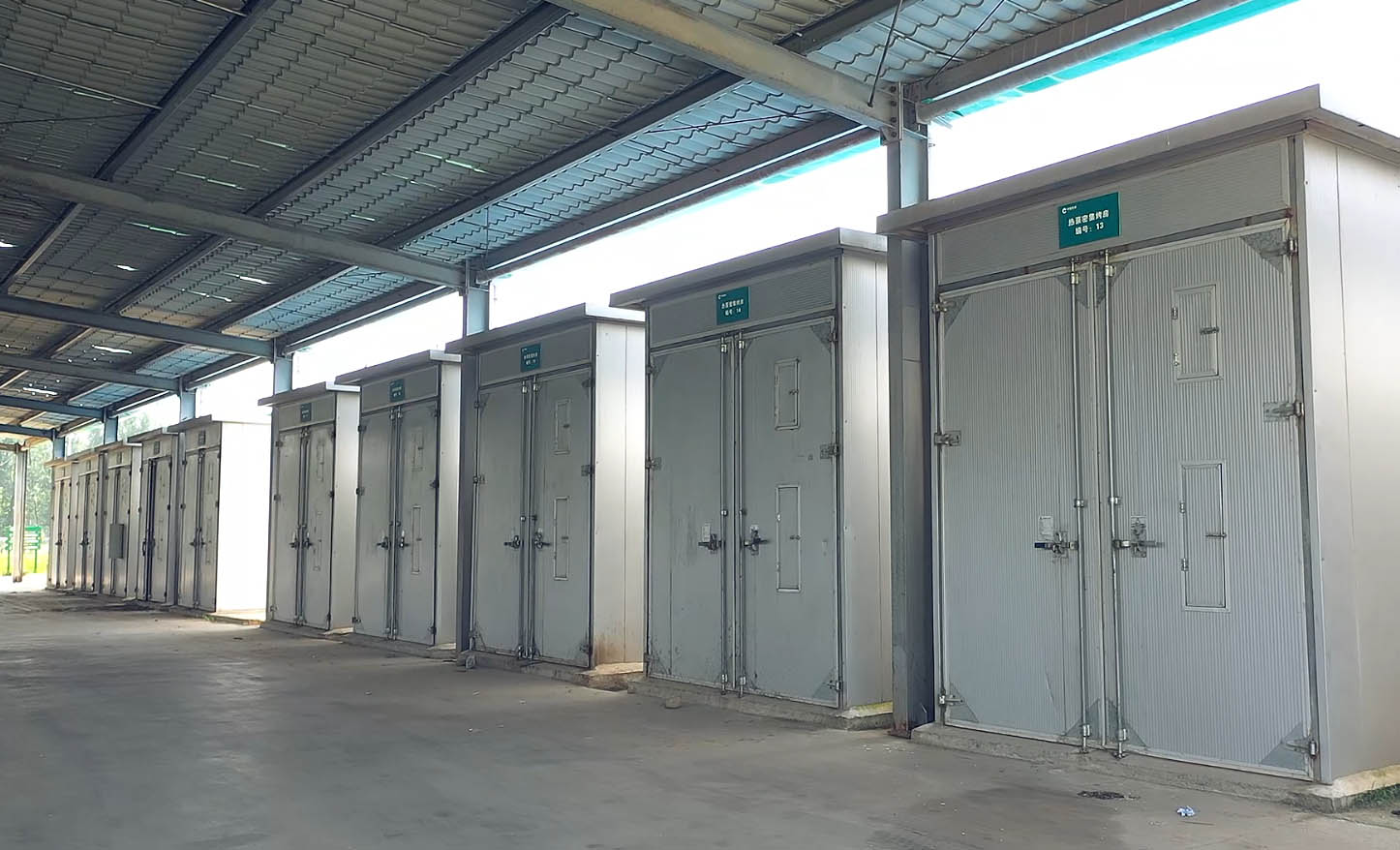
In the future, with the advancement of the "dual carbon" goals (carbon peaking and carbon neutrality) and the development of agricultural modernization, the Zhongye system will be further optimized: combining Guiyang's abundant solar energy resources, a "air-source heat pump + solar energy" hybrid energy supply model will be developed to reduce power consumption; the intelligent control system will be upgraded to achieve IoT connection with tobacco planting bases, automatically adjusting parameters according to the real-time moisture content of tobacco leaves. This system will continue to play a demonstration role, promoting the transformation of traditional agriculture into a green, efficient, and sustainable modern agriculture.