Solar Centralised Hot Water for a 150-Tonne/Day School Campus: Jinan Yanyang Junior High School, Shandong

2025/09/18 14:06


Case Study

Solar Centralised Hot Water for a 150-Tonne/Day School Campus: Jinan Yanyang Junior High School, Shandong

How a flat plate solar thermal system replaced conventional heating to deliver reliable daily hot water for over 1,000 students and staff — with near-zero operating emissions.

150 t/day    Hot Water Output Capacity
Zero    On-Site Combustion Emissions
24/7    Continuous Hot Water Availability

Project Background

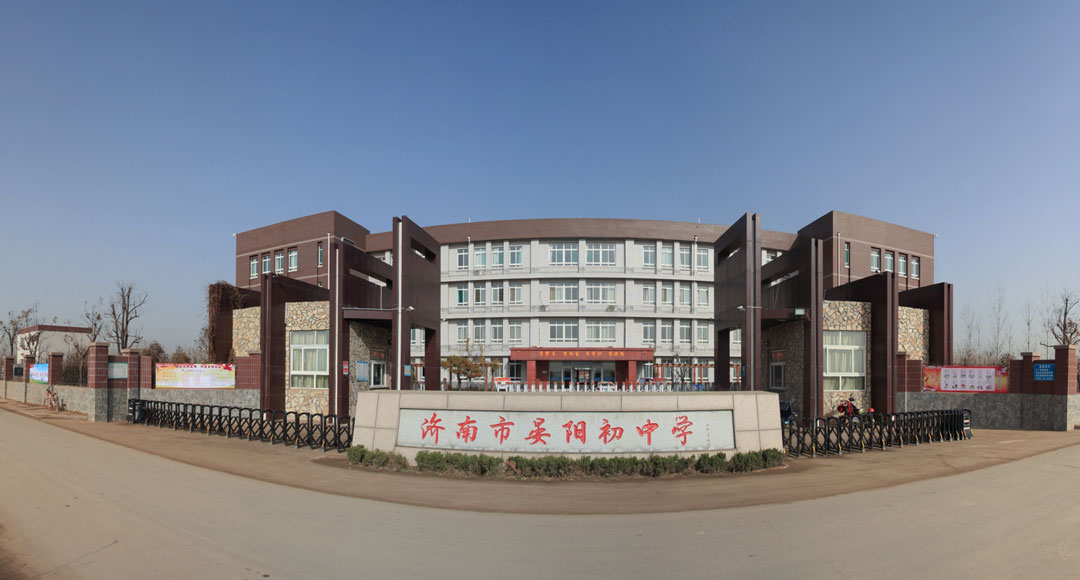
Jinan Yanyang Junior High School is a boarding school in Jinan, the capital of Shandong Province. With a large student population living on campus, the school's daily hot water demand is substantial — cafeterias, dormitory showers, and washroom facilities all draw from the same supply during concentrated peak periods (morning and evening).

The school's previous heating system relied on conventional energy sources, which created three compounding problems: high fuel and electricity costs that consumed a growing share of the school's operating budget, emissions and noise that conflicted with campus environmental standards, and maintenance complexity that diverted staff attention from educational operations.

Soletks Group was engaged to design and deliver a solar centralised hot water system tailored to the school's actual demand profile, roof geometry, and local climate conditions.

Site Conditions and Design Parameters

Jinan sits in a warm-temperate continental monsoon climate zone. It receives moderate-to-good annual solar radiation — roughly 4.5–5.0 kWh/m²/day on an annual average basis — with strongest collection potential from March through October and reduced but still usable radiation in winter months.

The design challenge for a school hot water project is not average radiation but peak demand concentration. Students shower in a narrow window each evening. Cafeterias draw large volumes of hot water during meal preparation. The system must deliver reliably during these peaks, not just produce energy over a 24-hour average.

Design principle: For school hot water projects, the critical sizing factor is peak-hour draw rate and storage buffer capacity — not just total daily solar collection. A system that produces enough energy on paper but cannot deliver it fast enough during the 6–8 PM shower window will fail in practice.

System Design and Technical Architecture

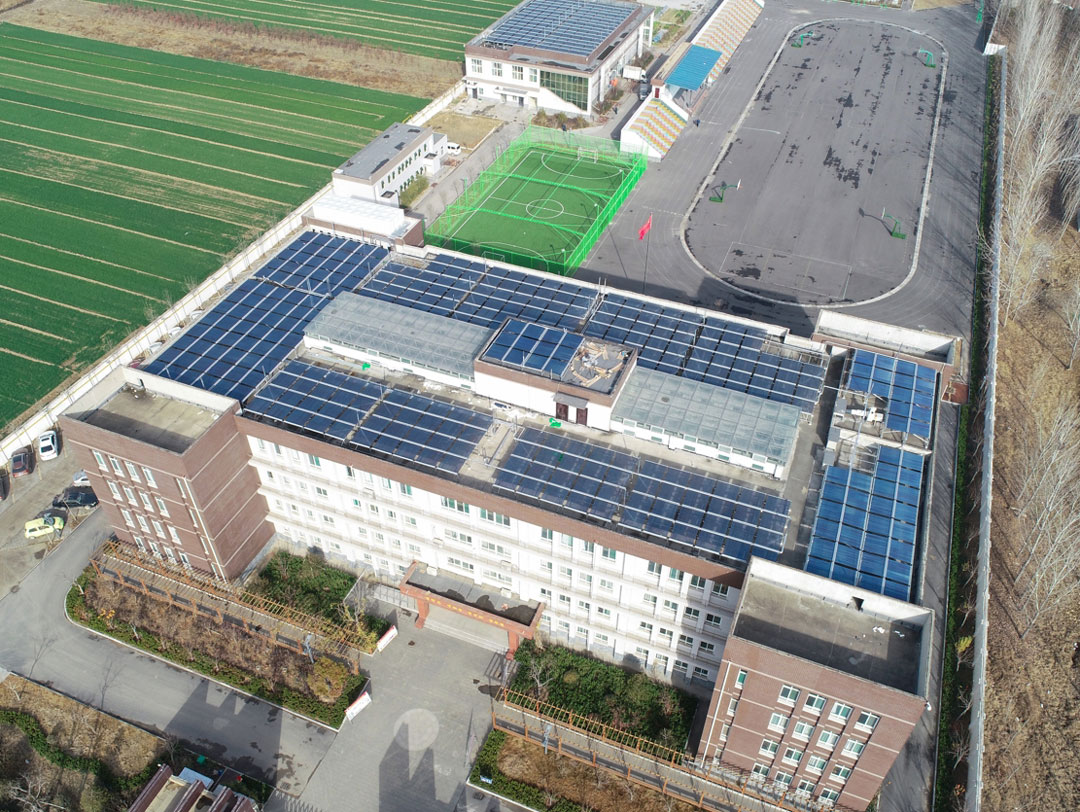
Collector Array: Flat Plate Technology

The system uses high-performance flat plate solar collectors mounted on available rooftop surfaces. Flat plate collectors were selected for their combination of efficiency in the 40–60°C operating range (optimal for domestic hot water), mechanical durability under rooftop wind exposure, and low long-term maintenance requirements.

The array is oriented and tilted to optimise collection during the months of highest demand. The installation preserves maintenance access paths and avoids shading from adjacent structures.

Thermal Storage: Buffering for Peak Demand

Large-capacity insulated storage tanks accumulate solar-heated water throughout the day. This stored volume acts as a thermal buffer, ensuring that the system can deliver the full evening peak demand even if afternoon cloud cover reduces real-time collection.

The storage-to-collector ratio was engineered to match the school's specific demand profile — a ratio that differs significantly from residential or hotel applications due to the concentrated draw pattern in school dormitories.

Intelligent Control and Automation

An automated control system manages the interaction between solar collection, storage charging, distribution, and any auxiliary backup. The controller responds to tank temperature, solar radiation levels, and distribution demand signals to optimise system behaviour without manual intervention.

For institutional operators, this automation reduces the staffing requirement to periodic inspection rather than daily oversight — an important operational consideration for schools where maintenance staff have competing responsibilities.

☀ High Collection Efficiency

Flat plate collectors maintain strong absorption even in diffuse-light conditions common during Jinan's transitional seasons.

🔨 Minimal Maintenance

No moving parts at the collector level. Centralized plant room concentrates all serviceable components in one location.

📊 Smart Load Matching

Control logic matches storage release to actual demand peaks, preventing shortfalls during the critical evening draw window.

🍃 Zero On-Site Emissions

No combustion, no exhaust, no noise — fully compatible with campus air quality and safety requirements.

Need a solar hot water system sized for a school, hospital, or dormitory campus? Soletks provides demand-specific engineering and factory-direct supply.

Discuss Your Project

Operational Performance and Results

Since commissioning, the system has delivered consistent operational results across multiple seasons.

150 Tonnes/Day Delivered

The system meets the school's full daily hot water requirement across cafeterias, dormitories, and washroom facilities — including concentrated evening peak demand.

Continuous Availability

Thermal storage ensures hot water remains available during cloudy periods and after sunset. Students and staff experience no supply interruptions during normal operation.

Operating Cost Reduction

With solar energy as the primary heat source, the school's annual water heating costs have decreased substantially compared to the previous conventional system.

Emission Elimination

On-site combustion has been fully eliminated. The campus no longer produces heating-related SO₂, NOₓ, particulate matter, or CO₂ during solar-covered operation.

Why This Project Model Matters for Institutional Buyers

School campuses share a demand pattern that makes them strong candidates for solar centralised hot water: high total volume, predictable daily profiles, concentrated peak draw windows, and multi-year facility lifespans that justify capital investment against operating cost savings.

The same system architecture applies to comparable institutional settings — military dormitories, worker housing compounds, boarding schools at any educational level, and hospital inpatient facilities with similar occupancy-driven demand curves.

Design FactorSchool / Dormitory ApplicationWhy It Matters
Peak draw concentration70–80% of daily demand in 2–3 hour windowStorage must be sized for burst delivery, not average production
Occupancy predictabilityFixed school calendar with known vacancy periodsAllows precise sizing without oversizing for unlikely peak scenarios
Facility lifespan20–40 year building service lifeSolar thermal lifecycle aligns well with institutional building horizons
Maintenance accessLimited to school breaks or weekendsSystem must be reliable enough to require only periodic, planned maintenance
Safety requirementsChildren on campus — no combustion, no exposed hot surfacesSolar thermal inherently meets campus safety constraints

What Project Developers Should Ask Before Specifying a Similar System

If you are evaluating solar centralised hot water for a school or institutional campus, these questions will separate capable suppliers from those offering only generic component quotes:

Has the manufacturer delivered school-scale projects with comparable daily output? A 150 t/day system requires different engineering depth than a 5 t/day residential installation. Ask for reference projects with verified output figures.

How is peak-hour delivery capacity guaranteed? Total daily energy is not the same as delivery rate during the evening shower window. The supplier should demonstrate how storage volume and distribution flow rates match your peak draw profile.

What auxiliary backup strategy is included? Even well-sized solar systems need backup for extended overcast periods. Ask what backup type is proposed, how it integrates with the solar loop, and what percentage of annual demand it covers.

What is the projected lifecycle cost versus conventional alternatives? A credible supplier provides a full lifecycle comparison — not just installation cost — including maintenance, component replacement intervals, and energy cost escalation assumptions.

Is the control system field-proven at this scale? Custom or untested controllers introduce project risk. Verify that the proposed automation has been deployed in comparable installations.

For guidance on freeze protection, glycol management, and system reliability in variable climates, refer to our technical best-practices guide.

Frequently Asked Questions

Can a solar system really deliver 150 tonnes of hot water per day for a school?

Yes, with a correctly sized collector array and sufficient thermal storage. The key is matching collector area to the local solar resource and sizing storage tanks to buffer for the concentrated evening demand peak. This project demonstrates that flat plate solar thermal systems can reliably serve high-volume institutional applications when properly engineered.

What happens during winter or extended cloudy weather?

Thermal storage provides continuity during short cloudy periods and overnight. For extended overcast weather, an auxiliary backup system activates automatically. The intelligent control manages transitions seamlessly, so the end users experience no interruption in hot water availability.

How does the operating cost compare to gas or electric water heating?

Solar thermal systems have minimal operating costs once installed — primarily periodic maintenance and any auxiliary backup fuel. For high-volume institutional applications, the operating cost reduction compared to gas or electric heating is typically substantial. The exact savings depend on local energy prices, system size, and solar fraction achieved.

Is this system model applicable outside China?

The system architecture — flat plate collectors, centralised storage, intelligent control, and zoned distribution — is climate-adaptable and transferable to any region with moderate-to-strong solar resources. Schools, dormitories, and institutional campuses in the Middle East, Africa, Southern Europe, Latin America, and South/Southeast Asia are strong candidates for similar deployments.

What maintenance does the system require?

Flat plate collectors have no moving parts and require only periodic inspection and glazing cleaning. The centralised plant room contains all pumps, valves, and controls in one accessible location. Typical maintenance can be scheduled during school breaks, minimising disruption to campus operations.

Ready to Explore Solar Hot Water for Your Campus?

Soletks delivers system-level solar thermal solutions for schools, hospitals, and institutional facilities — from demand analysis through factory-direct supply.

     150+ t/day institutional project experience
     Peak-demand storage sizing expertise
     Flat plate collectors for 40–60°C DHW range
     Intelligent automation with remote monitoring
     Factory-direct pricing and OEM flexibility
     International project support and documentation
Contact Engineering Team