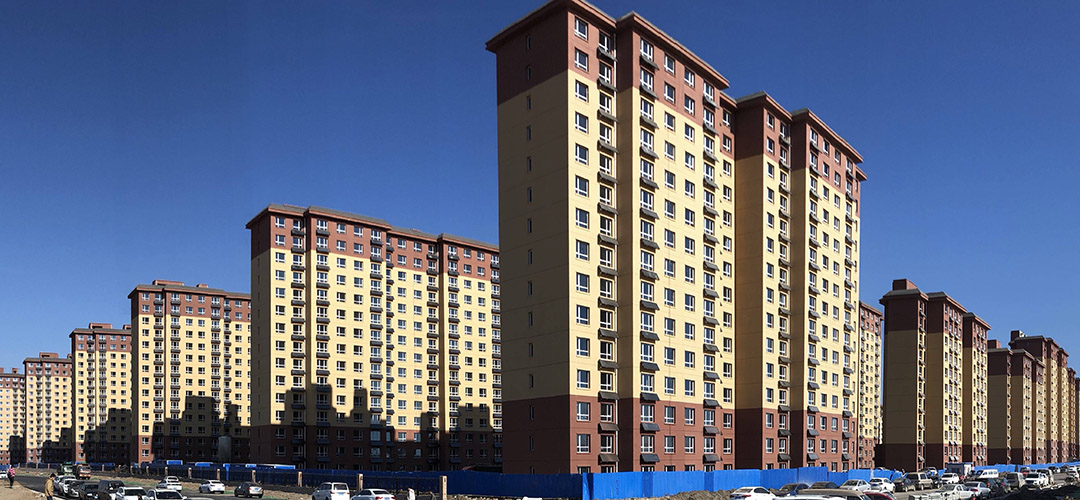
Balcony-Mounted Solar Water Heater Project: 4,747 Households in a Single Community
How split-type balcony solar water heaters were deployed across an entire residential community in Zhangbei, Hebei — achieving 70% solar fraction, 60% cost savings, and reliable operation at -30°C. Deployment insights for developers, distributors, and EPC contractors.
A balcony-mounted solar water heater system was installed across 4,747 households in the Sino-German Asian Games Village community in Zhangbei County, Hebei Province, China. Completed in 2020, the project achieved 100% household coverage — every residential unit in the community received a dedicated split-type solar hot water system. With an average solar fraction of 70% and operating reliably through winters reaching -30°C, this remains one of the largest single-community balcony solar deployments in northern China. This case study examines the system configuration, cold-climate adaptation, deployment methodology, and measured resident outcomes — with commercial observations for B2B buyers evaluating large-scale residential solar hot water solutions.
Why Residential Developers Choose Balcony-Mounted Solar Hot Water
Rooftop solar installations work well for low-rise buildings, but multi-storey and high-rise residential developments face a fundamental constraint: available roof area per household decreases as building height increases. A 20-storey tower with 4 units per floor has 80 households sharing a roof that might accommodate 10–15 collector panels at best. Balcony-mounted systems solve this by allocating each household its own dedicated collector — installed on the unit's own balcony railing or facade position.
For property developers, balcony-mounted solar hot water systems offer three distinct advantages over centralized rooftop alternatives. First, each household has an independent system with no shared infrastructure, which eliminates the billing complexity and maintenance disputes common in centralized installations. Second, the systems can be specified and installed as part of the building fitout — delivered with the apartment rather than retrofitted later. Third, they comply with building-integrated renewable energy mandates that many Chinese provinces now enforce for new residential developments.
The commercial logic for distributors and EPC contractors is equally clear: residential community projects at this scale (4,000+ units) represent high-volume, standardized procurement opportunities. The product specification is consistent across hundreds or thousands of units, installation follows repeatable procedures, and the developer serves as a single decision-maker for the entire order. This is volume B2B business with predictable logistics — not scattered retail sales.
Project Overview: Zhangbei Sino-German Asian Games Village
The Sino-German Asian Games Village is a residential community in Zhangbei County, Zhangjiakou City, Hebei Province — approximately 220 km northwest of Beijing. Zhangbei sits at an elevation above 1,400 meters on the Bashang Plateau, where winter temperatures routinely reach -25°C to -30°C and the heating season extends from October through April.
The community includes both high-rise residential towers and multi-storey buildings. The project was implemented throughout 2020 — from system design and equipment procurement through installation, commissioning, and resident training. All systems were operational and residents trained by year-end 2020.
Project context: Zhangjiakou was the co-host city for the 2022 Beijing Winter Olympics and designated a national renewable energy demonstration zone. Zhangbei County specifically promoted the integration of new energy with residential infrastructure. This project was recognized as a "Green Building Demonstration Project" by the Hebei Provincial Department of Housing and Urban-Rural Development in 2021.
System Design for High-Rise and Multi-Storey Buildings
The project uses split-type solar water heater systems — a configuration where the collector panel is mounted externally (on the balcony) and connected via insulated piping to an indoor hot water storage tank. This split architecture is specifically designed for apartment buildings where integrated (collector + tank as one unit) systems cannot be practically mounted on balconies due to weight and space constraints.
Inclined Collectors for High-Rise Facades
High-rise residential units receive inclined balcony-mounted collectors designed to follow the curvature of the building facade. The mounting angle is optimized for winter solar collection in Zhangbei's latitude (approximately 41°N), while the physical profile is engineered to avoid protruding beyond the balcony envelope — maintaining the building's architectural line and avoiding interference with neighboring units' light access.
The inclined format also facilitates natural drainage of condensation and rainwater, preventing pooling that could cause corrosion or freeze damage on the collector surface during winter.
Horizontal Collectors for Multi-Storey Buildings
Multi-storey buildings (typically 6 floors or fewer) have wider balconies and fewer shading constraints from upper floors. These units receive horizontal collector panels matched with high-efficiency insulated water tanks. The horizontal orientation allows larger aperture area within the available balcony space, and the lower building height means less wind exposure — reducing the structural demand on the mounting system.
Solar + Electric Auxiliary Dual Mode
Each household system operates in dual mode: solar collection as the primary heat source, with electric auxiliary heating that activates automatically when solar input is insufficient. This ensures 24-hour hot water availability regardless of weather conditions — a non-negotiable requirement for residential installations where residents expect on-demand hot water at all times.
The electric auxiliary element is integrated within the insulated storage tank and controlled by a thermostat. When tank temperature drops below the setpoint (typically 45–50°C for residential delivery), the heating element engages until target temperature is restored. In Zhangbei's climate, the solar fraction averages 70% annually — meaning approximately 70% of the energy required to heat domestic hot water comes from solar collection, with the remaining 30% provided by auxiliary electricity.
Cold-Climate Performance: Operating at -30°C
Zhangbei's winter conditions represent an extreme test for any solar thermal system. The combination of very low temperatures (-25°C to -30°C), high wind exposure on the plateau, and extended periods of low solar altitude angles during December and January creates demanding operating conditions that many standard solar water heaters cannot withstand.
Freeze-Resistant Heat Transfer
The split system uses a closed-loop glycol circuit between collector and tank. The heat transfer fluid is rated to -40°C, providing significant safety margin beyond the -30°C ambient extremes. No domestic water flows through exposed outdoor piping.
Absorber Coating Optimization
Climate adaptability testing was conducted to optimize the selective absorber coating for Zhangbei's specific conditions — high-altitude UV exposure combined with extreme cold. The coating maintains high absorptivity and low emissivity even after thermal cycling between +80°C (stagnation) and -30°C.
Insulated Tank Design
Indoor storage tanks use high-density polyurethane foam insulation with thermal retention designed for the extreme indoor-outdoor temperature differential. Standing heat loss is minimized to ensure water heated during daylight remains usable through the following morning.
Pipeline Protection
All outdoor piping connecting balcony collectors to indoor tanks is wrapped with thermal insulation cotton and aluminum sheathing. This prevents both freezing of the glycol circuit during extreme cold and accidental contact burns during summer stagnation temperatures.
Performance validation: The project developer conducted climate adaptability testing in collaboration with German technical partners prior to deployment. Systems were validated for operation at sustained -30°C ambient temperatures, confirming that the collector, piping, and tank systems maintained integrity and function without freeze damage or performance degradation beyond normal winter de-rating.
Measured Benefits for 4,747 Households
Based on an estimated 150 liters of hot water per household per day, the 4,747-unit community would consume approximately 1.26 million cubic meters of natural gas annually if served by conventional gas water heaters (at 85% thermal efficiency). The balcony solar systems, achieving an average 70% solar fraction, displace approximately 882,000 m³ of natural gas per year.
This translates to approximately 2,300 tons of CO₂ emission reduction annually — equivalent to the carbon sequestration of approximately 128,000 trees. For individual households, the cost savings amount to 500–800 CNY per year (approximately USD 70–110) compared to gas water heater operation, representing a 60% reduction in hot water energy expenditure.
| Metric | Gas Water Heater (Baseline) | Balcony Solar System |
|---|---|---|
| Annual energy cost per household | ~1,200–1,500 CNY | ~500–700 CNY |
| Community annual gas consumption | ~1,260,000 m³ | ~378,000 m³ (auxiliary only) |
| Community annual CO₂ emissions | ~3,276 tons | ~983 tons |
| Maintenance complexity | Annual gas safety inspection per unit | Periodic cleaning + visual inspection |
| Hot water availability | On-demand (gas supply dependent) | 24-hour (solar + electric backup) |
Quality Control in Large-Scale Residential Deployment
Installing 4,747 individual solar hot water systems across a community — each with its own collector, piping run, storage tank, and control unit — demands rigorous quality control processes that go far beyond single-unit residential installations. The methodology used in this project provides a reference framework for developers and EPC contractors planning similar large-scale deployments.
Standardized Installation Protocol
A dedicated installation team was assembled to execute installations following the national Technical Code for Application of Solar Water Heating Systems in Civil Buildings. Standardized procedures ensured consistent quality across all 4,747 units regardless of which installation crew performed the work.
100% Unit-Level Testing
Every household system underwent pressure testing and thermal performance testing after installation — not sampling-based QC, but full individual verification. This achieved a 100% acceptance rate at commissioning, preventing post-occupancy warranty claims that erode project economics.
Community Service Station
A dedicated on-site service station was established within the community for post-installation support. It provides 24-hour fault repair, scheduled system cleaning, and pipeline inspection — ensuring the 15-year design life is achievable without residents managing maintenance independently.
Resident Training
All households received training on system operation including the mobile APP interface for monitoring water temperature and remaining tank volume. This reduces unnecessary service calls caused by user misunderstanding and improves resident satisfaction with the system.
Developing a residential project requiring solar hot water systems for 500+ units? Get volume pricing and deployment planning from Soletks.
Request Bulk QuotationApplicability for International Residential Projects
The balcony-mounted split solar water heater is not unique to the Chinese market. The product category is well-established across southern Europe, the Middle East, North Africa, and parts of Southeast Asia — any region where apartment-style housing dominates and rooftop space is shared or unavailable for individual household systems.
For international distributors and project developers, the key lessons from this project apply broadly:
Volume Procurement Logic
Community-scale projects (500–5,000+ units) are typically procured as a single B2B order through the property developer. This concentrates decision-making, simplifies logistics, and enables factory-direct pricing without retail intermediaries.
Building Integration Timing
The optimal deployment point is during building construction or fitout — not post-occupancy retrofit. This allows piping channels, mounting brackets, and electrical connections to be pre-installed within the building envelope, reducing installation time and cost per unit.
Climate Adaptation
Systems must be specified for the deployment climate. Cold-climate models (rated to -30°C or below) use closed-loop glycol circuits and enhanced insulation. Warm-climate models can use simpler open-loop designs with lower insulation requirements and reduced cost.
Regulatory Compliance
Many jurisdictions now mandate renewable energy integration in new residential buildings. Balcony-mounted solar hot water is one of the lowest-cost compliance pathways — requiring no shared infrastructure, no rooftop structural upgrades, and no complex metering arrangements.
Soletks Split Solar Water Heater Solutions
Soletks supplied the split pressurized solar water heater systems used in this project. The split-type product line is designed specifically for balcony and facade-mounted applications in multi-storey and high-rise residential buildings, with configurations ranging from 100L to 300L tank capacity per household.
Soletks Split Solar Water Heater for Residential Projects
Purpose-built for balcony-mounted deployment in apartment buildings. Available in cold-climate and warm-climate configurations with OEM/ODM customization for volume orders.
As a direct manufacturer based in Dezhou, Shandong Province, Soletks offers volume pricing, custom branding, and project-specific engineering for residential development projects. The company's flat plate collector technology — which forms the basis of both the split water heater range and the larger engineering collector series — benefits from in-house selective absorber coating production, ensuring quality control from raw material through finished system.
For projects requiring compliance with European standards, Soletks holds Solar Keymark certification for its collector products, along with ISO 9001, ISO 14001, and ISO 45001 management system certifications. Volume buyers can request factory audit arrangements and reference project documentation. For product technical details, visit the solar hot water systems resource page.
Frequently Asked Questions
How does a balcony-mounted solar water heater differ from a rooftop system?
A balcony-mounted system uses a split-type configuration: the collector panel is installed on the balcony railing or facade, while the insulated storage tank is positioned indoors. A closed-loop circuit connects them via insulated piping. Rooftop systems typically use integrated designs (collector and tank as one unit) or centralized arrays. The balcony approach gives each household an independent system without relying on shared rooftop space — essential for high-rise buildings where roof area per household is minimal.
Can these systems operate reliably at -30°C?
Yes — when properly specified. Cold-climate split systems use a closed-loop glycol circuit with antifreeze fluid rated to -40°C or below. No domestic water passes through exposed outdoor components. The collector, piping insulation, and tank insulation must all be rated for the deployment climate. The Zhangbei project confirmed reliable operation through multiple winter seasons at -30°C ambient temperatures without freeze damage or performance failure.
What is a realistic solar fraction for balcony systems in cold climates?
In cold, high-irradiance climates like northern China's Bashang Plateau (strong winter sun despite extreme cold), 70% annual solar fraction is achievable. In cloudy cold climates (e.g., northern Europe), solar fractions of 40–60% are more typical for well-designed split systems. The remaining energy demand is met by electric auxiliary heating integrated within the tank.
How are 4,000+ unit installations managed for quality consistency?
Standardized installation protocols, dedicated installation teams, and 100% unit-level commissioning testing are essential. In this project, every one of the 4,747 systems underwent individual pressure and thermal performance testing before acceptance. Sampling-based QC is insufficient at this scale — defective units discovered post-occupancy create disproportionate warranty and reputation costs for the developer.
What order volume makes factory-direct procurement viable?
For split solar water heater systems, minimum order quantities for factory-direct pricing from a manufacturer like Soletks typically start at 100–200 units for standard configurations. For custom specifications (branded tanks, non-standard dimensions, specific color matching), MOQs may be higher. Community-scale projects of 500+ units receive the most competitive pricing and can negotiate custom engineering, packaging, and delivery scheduling.
Source Split Solar Water Heaters for Your Residential Project
Tell us your project scale, building types, and climate zone for a tailored product recommendation and volume quotation.