Chinese
 Español
 Francés
 Deutsch
 Русский
 العربية
 Português
 日本語
日本語
 한국어
한국어
 Italiano

Sichuan Daocheng Yading Hotel Solar Hot Water Project
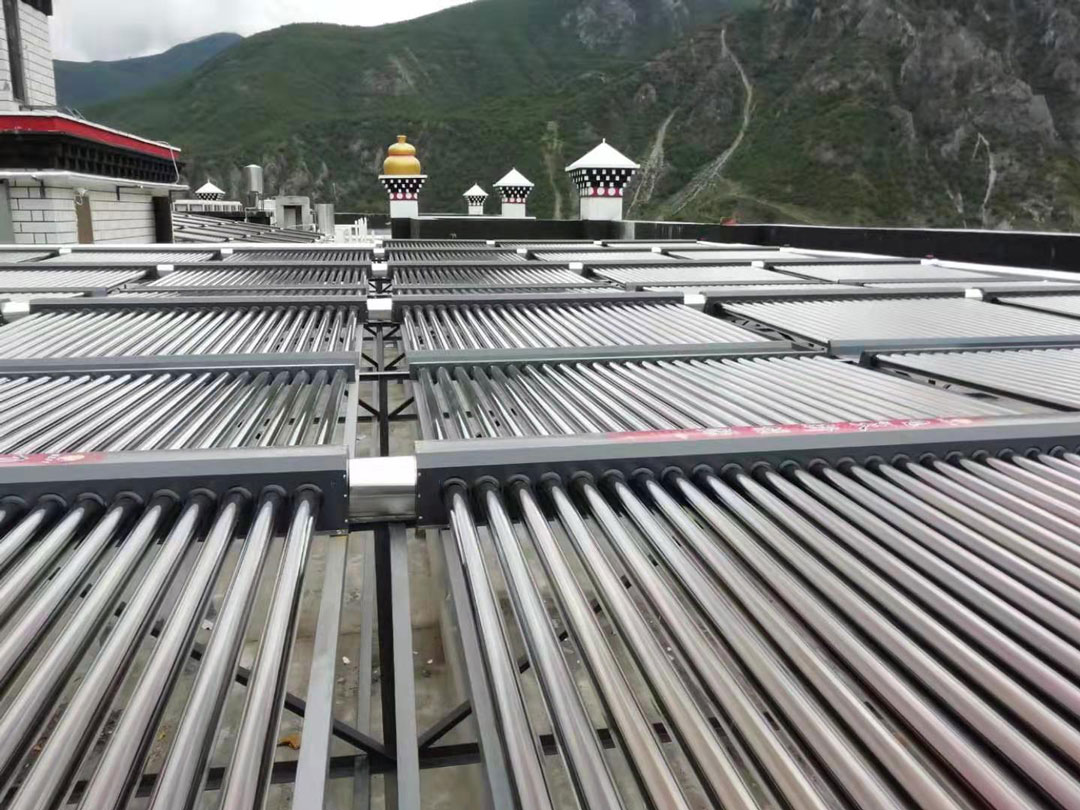
The Sichuan Daocheng Yading Hotel, located in the renowned western tourist destination of Daocheng Yading, is famous for its unique natural scenery and high-end hotel services. To enhance service quality and meet the high-standard hot water requirements of guest rooms, restaurants, and recreational facilities while promoting environmental sustainability, the hotel implemented a solar hot water project. The project was completed and put into operation in June 2021, with a design capacity of 60 tons per day, providing stable and sufficient hot water supply for all guest rooms and public facilities.
Project Background and Significance
Daocheng Yading is a high-altitude tourist area where hotels have high and seasonal hot water demands. Traditional gas or electric water heating systems consume significant energy and incur high operating costs, and during peak periods often fail to provide sufficient hot water, affecting guest experience. To ensure stable hot water supply for guest rooms and public areas while reducing energy consumption and carbon emissions, the hotel adopted a solar hot water system. This system utilizes renewable solar energy to efficiently convert sunlight into thermal energy, achieving energy-saving, environmentally friendly, and efficient hot water supply.
Project Scale and Objectives
The solar hot water system is designed with a capacity of 60 tons per day, sufficient to meet the hot water demands of multiple hotel buildings, including guest rooms, restaurants, conference rooms, gyms, and other public facilities. The project aims not only to provide ample hot water but also to reduce hotel energy costs, achieve green and sustainable operation, and enhance the hotel’s reputation in the high-end tourism market as a sustainable and environmentally conscious property.
System Components and Technical Features
The Daocheng Yading Hotel solar hot water system employs advanced solar thermal conversion technology and intelligent control systems, comprising the following key components:
Solar Collectors
High-efficiency flat-plate or evacuated tube solar collectors are used, offering superior heat absorption and stable output. These collectors efficiently capture solar energy in the high-altitude strong sunlight environment and maintain effective operation even under low-temperature conditions, ensuring sufficient hot water supply.Storage System
Large-capacity storage tanks store the heat collected from the solar collectors, with insulation to minimize heat loss. The storage system ensures adequate hot water supply during nighttime or cloudy weather, providing uninterrupted hot water throughout the day.Circulation and Control System
An intelligent control system monitors water temperature, regulates pump circulation, and distributes hot water efficiently. The system adjusts its operation based on actual hot water demand in guest rooms and public areas, optimizing energy use.Auxiliary Heating Devices
During continuous cloudy periods or peak water demand, auxiliary electric heaters provide rapid supplementary heat, ensuring stable and reliable hot water supply.
Project Advantages
Energy-Saving and Environmentally Friendly
Solar energy, as a clean and renewable resource, significantly reduces dependence on electricity or gas, lowers carbon emissions, and aligns with green hotel and low-carbon tourism principles.Stable and Reliable Hot Water Supply
High-capacity storage and intelligent control guarantee continuous hot water supply. Even during cloudy weather or peak periods, guest rooms and public facilities receive adequate hot water.Significant Economic Benefits
The system has low operating costs. Long-term use substantially reduces hotel energy expenses. Compared with traditional water heating methods, the project has a short payback period and offers considerable economic benefits.High-Altitude Adaptability
Located on the plateau, Daocheng Yading has low temperatures and thin air. The system’s high-efficiency collectors and intelligent controls ensure stable operation in the unique high-altitude environment, meeting year-round hot water needs.Enhancing Hotel Brand Image
As a green and energy-saving project, it aligns with sustainable tourism principles, enhancing guest comfort while elevating the hotel’s social image and brand value in environmental protection and energy conservation.
Project Outcomes
Since its commissioning in June 2021, the solar hot water system has consistently supplied approximately 60 tons of hot water daily, meeting peak demand across the hotel’s facilities. The system operates reliably, and the combination of intelligent control and auxiliary heating ensures continuous and stable hot water supply. Through this project, the hotel has achieved multiple goals: energy conservation, reduced operating costs, and improved service quality, setting a benchmark for green high-end hotels.
In conclusion, the Sichuan Daocheng Yading Hotel solar hot water project, through careful planning, advanced technology, and intelligent management, provides efficient, stable, and environmentally friendly hot water supply. It meets the high-standard operational needs of the hotel while playing a vital role in energy saving, emission reduction, sustainable development, and green tourism, with significant social, economic, and environmental value.