Chinese
 Español
 Francés
 Deutsch
 Русский
 العربية
 Português
 日本語
 한국어
 Italiano

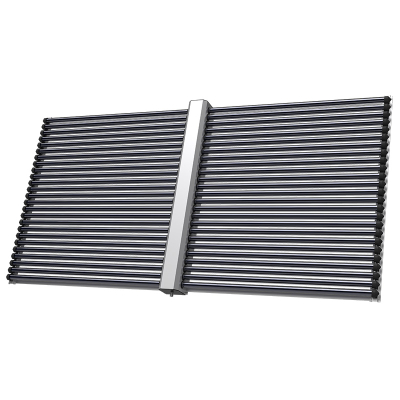
SOLETKS ATPC Solar Hot Air System: Redefining Household Heating
Product Definition
SOLETKS ATPC Solar Hot Air System is a solar thermal heating solution designed to directly convert solar radiation into usable hot air for indoor space heating, improving household thermal comfort while reducing dependence on conventional fossil-fuel-based heating systems.
Technical Parameters and Specifications
System type: Active solar hot air heating system
Collector technology: Air-type flat plate solar collector
Absorber material: Aluminum alloy with selective coating
Absorptivity (α): ≥0.92
Air flow rate: 80–180 m³/h per module
Temperature rise: 20–45°C above ambient
Operating temperature range: -25°C to 80°C
Thermal efficiency: 45%–65%
Power consumption (fan): ≤60 W
Noise level: ≤45 dB
Design lifespan: ≥15 years
Structure and Material Composition
Transparent Cover: Tempered low-iron glass or polycarbonate sheet
Absorber Plate: Selective-coated aluminum thermal plate
Air Flow Channels: Optimized convection passages for heat exchange
Thermal Insulation Layer: High-density mineral wool or PU insulation
Housing Frame: Corrosion-resistant aluminum alloy casing
Control Unit: Temperature sensors and automatic fan control
Manufacturing Process
Raw Material Selection: Aluminum sheets, insulation, glazing materials
Absorber Surface Treatment: Selective coating application
Air Channel Forming: Precision stamping and folding
Collector Assembly: Integration of absorber, channels, and insulation
Frame Sealing: Structural reinforcement and airtight sealing
Control System Integration: Sensors, fans, and wiring installation
Performance Testing: Thermal efficiency and airflow validation
Industry Comparison
| System Type | Solar Hot Air System | Solar Hot Water System | Electric Space Heater |
|---|---|---|---|
| Primary Energy Source | Solar | Solar + Electricity | Electricity |
| Energy Conversion Loss | Low | Medium | High |
| Installation Complexity | Moderate | High | Low |
| Operating Cost | Very Low | Low | High |
Application Scenarios
Detached and semi-detached residential housing
Rural and off-grid household heating projects
Energy-efficient housing developments
Building retrofits for heating cost reduction
EPC renewable heating demonstration projects
Core Pain Points and Solutions
High winter heating costs: Solar hot air reduces grid energy demand
Complex hydronic systems: Air-based heating avoids piping and leakage
Slow heating response: Direct air heating delivers rapid temperature rise
Maintenance concerns: Simple mechanical structure lowers upkeep needs
Risk Warnings and Mitigation Measures
Insufficient solar exposure; conduct site solar assessment
Heat loss through ducts; apply insulated air ducts
Overheating risk; integrate thermostatic control
Dust accumulation; schedule periodic filter cleaning
Procurement and Selection Guide
Assess local solar radiation and heating demand
Determine required air volume and system capacity
Confirm compatibility with building layout
Review absorber coating and insulation quality
Check electrical consumption and control logic
Verify compliance with regional building codes
Evaluate supplier technical support and warranties
Engineering Case Study
In a cold-climate residential pilot project, the SOLETKS ATPC Solar Hot Air System was installed across 20 single-family homes. Each unit provided an average indoor temperature increase of 6–8°C during daylight winter hours, reducing conventional heating energy use by approximately 35% annually.
FAQ
What is the main advantage of solar hot air systems? — Direct heat delivery with minimal losses.
Can the system operate in winter? — Yes, even in sub-zero environments.
Does it require water or antifreeze? — No, it uses air as the heat medium.
How fast is the heating response? — Typically within minutes of sunlight.
Is electrical power required? — Only for low-power fans and controls.
Can it work alongside existing heaters? — Yes, as a supplementary system.
What maintenance is required? — Periodic cleaning and fan inspection.
How long is the system lifespan? — Generally over 15 years.
Is noise an issue? — Operating noise remains below household comfort levels.
Can it be roof or wall mounted? — Both configurations are supported.
Call to Action
For detailed technical documentation, system configuration advice, pricing, or evaluation samples related to the SOLETKS ATPC Solar Hot Air System, please submit your project requirements for professional assessment.
E-E-A-T Author Credentials
This content is prepared by renewable energy engineers and building energy consultants with extensive experience in solar thermal system design, residential heating optimization, and EPC project implementation across multiple climate regions.