Chinese
 Español
 Francés
 Deutsch
 Русский
 العربية
 Português
 日本語
 한국어
 Italiano

SunEarth vs Silicon Solar vs SOLETKS Flat-Plate Collectors: A Certified Datasheet Guide for EPC Buyers
SunEarth vs Silicon Solar vs SOLETKS Flat-Plate Collectors: A Certified Datasheet Guide for EPC Buyers
Compare SunEarth ThermoRay, Silicon Solar's SunMaxx TitanPower listing and the SOLETKS FPC200 using certificates, area basis, pressure ratings, hydraulics and a complete EPC submittal package — not brochure headlines.
Comparing SunEarth, Silicon Solar and SOLETKS flat-plate collectors is not a matter of choosing the highest efficiency printed on a product page. The first task is to identify who manufactures the proposed collector, who holds its certificate, which exact model will be delivered, and whether every performance value uses the same area and test basis.
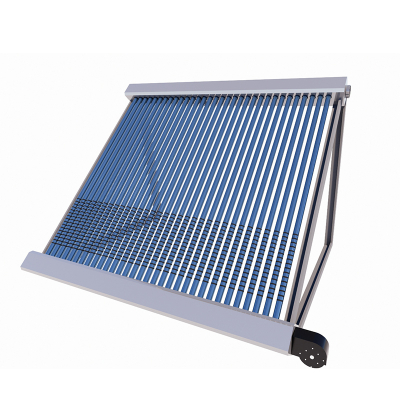
SunEarth ThermoRay
Choose when the tender requires a current US OG-100–listed model and the submitted SunEarth model fits the field layout, hydraulic design and local support plan.
Silicon Solar / TitanPower
Evaluate the quote against the exact SunMaxx TitanPower model and SunMaxx certificate named in the quote — not against the reseller name alone.
SOLETKS FPC200
Shortlist when its smaller module format, four-port array layout, project customization and export supply model fit the job — provided evidence is bound to the exact delivered model.
There is no defensible universal winner. There is only a collector whose evidence, duty-point output, structure, hydraulics, delivery scope and lifecycle support best match a specific project.

First, correct the product identities
Search results and distributor pages often mix companies, product families and legacy documents. An EPC buyer should freeze the following four identities before comparing any number.
Seller
The company issuing the quotation and commercial warranty.
Manufacturer
The factory responsible for the product.
Certificate holder
The legal entity and model recorded by the certification body.
Delivered model
The complete model code, revision, orientation and connection option on the nameplate.
For the representative products in this guide, the current public evidence reads as follows.
| Quotation / search name | What the current evidence shows | Representative model used here | Certificate check |
|---|---|---|---|
| SunEarth / ThermoRay | SunEarth is the manufacturer and certificate holder; ThermoRay is its flat-plate series | ThermoRay Blue TRB-32 | ICC-SRCC OG-100 No. 10001804, active through Oct 1, 2026 |
| Silicon Solar / TitanPower | Silicon Solar states it is an online retailer for SunMaxx products; the manufacturer and OG-100 holder is SunMaxx | TitanPowerPlus ALDH29-V3 (confirm exact quote model) | ICC-SRCC lists SunMaxx record No. 10002034 for ALDH29-V3, active through May 1, 2027 |
| SOLETKS / FPC200 | SOLETKS publishes and supplies the engineering-specific FPC200 directly | FPC200 | Company-level CE + Solar Keymark stated; require exact model certificate annex and test report with the bid |
Certificate status checked in the ICC-SRCC main directory on September 1, 2026. Status can change — recheck at bid submission, purchase order and delivery.
Why the identity check prevents expensive mistakes
A distributor may publish a valid certificate for an older model while quoting a newer revision. A current web page can also combine a legacy title with a new SKU. The EPC team should require a one-page model cross-reference, signed by the supplier, that traces the full chain end to end.
Side-by-side published data: useful, but not yet a performance ranking
The table below uses one currently marketed representative model from each route. It is a procurement map — not a declaration that the three collectors are equivalent.
| Published field | SunEarth ThermoRay TRB-32 | Silicon Solar / SunMaxx TitanPowerPlus ALDH29-V3 | SOLETKS FPC200 |
|---|---|---|---|
| Commercial role | Manufacturer & certificate holder | Silicon Solar sells; SunMaxx manufactures & holds cited OG-100 listing | Manufacturer & project supplier |
| Collector type | Glazed liquid flat plate | Glazed liquid flat plate | Glazed liquid flat plate |
| Gross area | 32.8 ft² / ~3.05 m² | 29.49 ft² / 2.74 m² | 2.00 m² |
| Aperture area | Not stated in current spec/certificate — request controlled submittal value | Product page: 2.57 m²; OG-100 tested sample: 2.50 m² — reconcile | 1.87 m² |
| Dry weight | 98 lb / ~44.5 kg | 92.6 lb / 42.0 kg | 30 kg |
| Fluid capacity | 1.0 US gal / ~3.79 L | 0.50 US gal / 1.9 L | 1.6 L |
| Published pressure | Max operating: 160 psi / ~11 bar | Max: 145 psi / 10 bar; range also 20–40 psi | Working pressure: 0.6 MPa / 6 bar |
| Published temperature | 200°C max design; 185°C standard stagnation | 200°C max design/stagnation field | 100°C max operating — request stagnation limit |
| Connections / array | 1-in copper header; sweat/press/O-ring-union options | 3/4-in press; double-header serpentine; up to 14 per row | Four G3/4 male ports; series or parallel arrays |
| Public performance evidence | Active model-specific OG-100 listing | Active SunMaxx OG-100 records — bind exact SKU to matching record | Product-page peak/rated values — require model certificate before simulation |
Sources: SunEarth ThermoRay Blue product page, March 2026 spec sheet, TRB-32 OG-100 certificate, Silicon Solar listing, SunMaxx ALDH29-V3 page, and the SOLETKS FPC200 product page. Rounded metric conversions are for screening only — use native certified values in final calculations.
The only fair way to compare thermal performance
For a glazed liquid collector, an ISO 9806–derived efficiency relationship is commonly expressed as:
Useful instantaneous power is then calculated using the same area basis attached to those coefficients. Gross-area coefficients cannot be applied to aperture area, and aperture-area coefficients cannot be applied to gross area. Inlet-temperature and mean-temperature coefficient sets also should not be mixed. The applicable ICC-SRCC OG-100 certificate or Solar Keymark datasheet should state the convention.
Do not compare these four numbers as if they were one metric
| Published value | What it can support | What it cannot support alone |
|---|---|---|
| η₀ / "peak efficiency" | Optical/zero-loss starting point when the test basis is known | Annual yield or high-temperature performance |
| a₁ and a₂ | Heat-loss behavior across temperature difference | Site yield without weather, incidence and system losses |
| OG-100 Category C daily output | US-standard screening at stated radiation/temperature category | A different climate, load, orientation or collector area |
| "Rated efficiency" / "rated power" | Screening only if the exact test condition is disclosed | Cross-brand ranking when condition/area basis differs |
SunEarth's TRB-32 certificate publishes gross-area coefficients of η₀ = 0.753, a₁ = 3.753 W/(m²·K) and a₂ = 0.0067 W/(m²·K²). The SunMaxx ALDH29-V3 OG-100 report publishes gross-area coefficients of η₀ = 0.737, a₁ = 3.400 W/(m²·K) and a₂ = 0.014 W/(m²·K²) — model-specific test inputs, not rounded marketing efficiencies.
The SOLETKS FPC200 page publishes a 0.78 peak efficiency, 0.53 rated efficiency and a "total heat-loss coefficient" of 5.4 W/(m²·K), but does not publish a separate a₁/a₂ pair on that page. Do not relabel the 5.4 value as a₁ or invent an a₂ — obtain the exact model's full certificate and report before inserting it into the same calculation.

A normalized OG-100 example for the two US-listed models
The OG-100 Category C condition represents an inlet-to-ambient temperature difference of 20°C. Per-square-meter figures below are derived from each certificate's gross area so panel size does not create a false advantage.
| Category C radiation bin | TRB-32 per panel | TRB-32 per gross m² | ALDH29-V3 per panel | ALDH29-V3 per gross m² |
|---|---|---|---|---|
| High: 6.3 kWh/m²·day | 11.06 kWh_th/day | 3.63 kWh_th/m²·day | 9.8 kWh_th/day | 3.58 kWh_th/m²·day |
| Medium: 4.7 kWh/m²·day | 7.64 kWh_th/day | 2.50 kWh_th/m²·day | 6.9 kWh_th/day | 2.52 kWh_th/m²·day |
| Low: 3.1 kWh/m²·day | 4.29 kWh_th/day | 1.41 kWh_th/m²·day | 4.0 kWh_th/day | 1.46 kWh_th/m²·day |
The larger TRB-32 produces more per panel, but its normalized values are close to the ALDH29-V3 values under these standard conditions. That is the useful conclusion — not that either model "wins." Local weather, operating temperature, incidence angle, field hydraulics and load utilization can outweigh the small normalized difference.
Use three duty points, not one brochure condition
| Duty point | Example screening condition | What it reveals |
|---|---|---|
| Low-temperature duty | G = 800 W/m², Tm − Ta = 10 K | Pool heating, cold-water preheat or low-temperature source support |
| Domestic hot-water duty | G = 800 W/m², Tm − Ta = 35 K | A realistic glazed-collector comparison for moderate-temperature delivery |
| Difficult condition | G = 400 W/m², Tm − Ta = 50 K | Part-cloud, winter or high-temperature heat-loss sensitivity |
For each row, require gross collector area, aperture area, efficiency, watts per collector, watts per square meter of roof envelope, flow, pressure drop and uncertainty. Then run the same collector files through an hourly system model with storage, pipe loss, pump electricity, heat-exchanger approach temperature and load timing. If a supplier cannot reproduce the calculation from a certificate or laboratory report, treat the quoted output as a marketing claim rather than a design input.
A 100 m² gross-module-area layout example
Module size changes panel count, roof packing, lifting and manifold complexity even when the nominal field size is the same. Because current SunEarth documents do not state TRB-32 aperture area, the calculation below uses gross module area for all three products and rounds up to at least 100 m². It is a logistics example, not a thermal-sizing method.
| Representative model | Panels required | Sum of module gross area | Dry collector mass (before fluid, rails, piping) |
|---|---|---|---|
| SunEarth TRB-32 | 33 | ~100.7 m² | ~1,469 kg |
| SunMaxx ALDH29-V3 via Silicon Solar | 37 | ~101.4 m² | ~1,554 kg |
| SOLETKS FPC200 | 50 | 100.0 m² | 1,500 kg |
This is not an energy-yield or equal-aperture calculation. It shows why "price per panel" is a poor procurement metric. A smaller panel can add connections and handling operations; a larger panel can reduce module count but demand more lifting space. Final field area must include inter-panel gaps, pipe corridors, roof edges, fire/access routes, tilt-row spacing and maintenance clearances.
The structural engineer must add: mounting rails, brackets, anchors and ballast; operating fluid and trapped water; headers, valves, insulation and cable/control hardware; snow, wind uplift and seismic actions where applicable; load concentration at attachment points; and temporary construction and maintenance loads.
SunEarth ThermoRay: what to verify
SunEarth's current website describes ThermoRay as a liquid flat-plate collector family and identifies ThermoRay Blue as the higher-selectivity option. The ICC-SRCC directory lists TRB-32 and TRB-40 as active OG-100 models through October 1, 2026.
This gives a US project team a clear model-specific certification route, but the date deserves attention: a certificate active during tender may be close to expiration by shipment or commissioning. The purchase order should require active status, or an authority-accepted alternative, at the milestone relevant to the incentive, permit or specification.
For a TRB-32 offer, request: certificate No. 10001804 and its complete rating pages; the current ThermoRay Blue specification-sheet revision; the current gross, aperture and absorber-area definitions used for layout and performance calculations; the selected connection option and compatible seals; pressure-drop data for the exact fluid concentration and design temperature; maximum panels per bank and reverse-return/manifold requirements; approved mounting details and project-specific wind/snow checks; and warranty terms, local service route and spare seals or glazing components.
Silicon Solar and SunMaxx TitanPower: compare the quoted model, not the storefront
Silicon Solar's solar-hot-water category states that it is an official online retailer for SunMaxx collectors and components. Its current flat-plate listing is dispatched and sold by Silicon Solar, while the page describes the collector as a SunMaxx product and directs buyers to SunMaxx mounting hardware.
That relationship is not a quality problem; distributors are normal in solar procurement. It is a documentation problem only when the quotation, certificate and delivered label do not use the same model identity.
The ICC-SRCC directory currently includes several active SunMaxx TitanPower records. For the V3 product, the relevant starting point is TitanPowerPlus ALDH29-V3, certificate No. 10002034, listed active through May 1, 2027. Require Silicon Solar to state in the quote whether that is the exact delivered model. If the quote instead identifies ALDH29, ALDH29-A or another variant, use that model's separate directory record and rating sheet.
The current SunMaxx technical page publishes 2.74 m² gross area, 2.57 m² aperture area, 42 kg dry weight, 1.9 L fluid capacity, 10 bar maximum pressure, 200°C stagnation temperature, 3/4-in press fittings and a suggested flow range of 0.2–0.5 gpm. It also describes a double-header serpentine arrangement and up to 14 collectors per row. These are useful design inputs, but the engineer should reconcile every field with the released datasheet and installation manual supplied for the purchase order.
The commercial submittal should also separate: Silicon Solar's seller obligations and return/freight terms; SunMaxx's manufacturer warranty and any installer conditions; certificate-holder obligations; responsibility for array design and mounting selection; and who provides commissioning, replacement parts and technical support at the project location.
SOLETKS FPC200: what the public product page establishes
The current SOLETKS engineering-specific collector page identifies FPC200 as a 2000 × 1000 × 80 mm, 2.0 m² gross / 1.87 m² aperture collector with 30 kg net weight, 0.6 MPa working pressure, four G3/4 male ports, 1.6 L fluid capacity and 100°C maximum operating temperature. It publishes peak efficiency of 0.78, rated efficiency of 0.53 and a total heat-loss coefficient of 5.4 W/(m²·K).

Those fields support early layout and hydraulic discussions. They do not replace the model-specific certificate package needed for a regulated tender. The page refers to CE and Solar Keymark at company/product-range level, so the bid should include:
Current Solar Keymark certificate and full annex naming FPC200, or the exact offered variant
ISO 9806 test report with certified η₀, a₁, a₂ and incidence-angle modifiers
Gross/aperture reference area and temperature convention for every coefficient
Proof/test pressure in addition to the 0.6 MPa working pressure
Pressure-drop curve by flow and fluid condition
Stagnation and freeze-resistance data
Array limit, balancing method and connection accessory schedule
Mounting drawings and independently checked project loads
Production inspection, traceability, warranty and spare-parts plan
Incoterms, packaging density, container/pallet quantities and site supervision terms
For an international EPC purchase, also lock Incoterms, packaging density, container/pallet quantities, marine-corrosion protection, replacement-glass strategy, site supervision and the language/version of all handover documents. For projects that also need larger centralized panels, the related EFPC115/EFPC150 flat-plate collectors and the EFPC integrated thermal module extend the same engineering family to bigger single-panel areas.
The EPC comparison matrix
Use mandatory pass/fail gates before weighted scoring. A high commercial score must never compensate for an absent certificate or a pressure rating below the design requirement.
Stage 1: mandatory gates
| Gate | Pass condition |
|---|---|
| Model identity | Quote, datasheet, nameplate, certificate, report and warranty identify the same product or include an approved cross-reference |
| Certification | Required program is active and applicable to the exact model, manufacturing site, market and project milestone |
| Duty-point output | Supplier provides reproducible calculations using certified coefficients and the project's conditions |
| Pressure and temperature | Working, maximum, proof/test and stagnation limits satisfy the system design and code margins |
| Structural route | Proposed mounting system has sufficient project-specific wind, snow, seismic and substrate evidence |
| Fluid/material compatibility | Absorber, headers, seals, glycol, water chemistry and dissimilar metals are compatible for the design life |
| Warranty and service | Seller/manufacturer responsibilities, exclusions, claim route and parts availability are contractually clear |
Any "fail" or "not submitted" remains a technical deviation until closed.
Stage 2: weighted evaluation
After all mandatory gates pass, a typical commercial project can score the remaining evidence as follows.
Scores should be assigned by a cross-functional team, with written evidence references — not sales impressions.
A 15-document RFQ package
Ask each bidder for the same package so omissions become visible.
Signed offer and scope-of-supply matrix
Exact model and revision cross-reference
Current product datasheet
Complete certificate and live directory link
Full ISO 9806 or referenced laboratory report
Thermal coefficients and calculation workbook
Pressure-drop curves for proposed fluid and temperature
Array-layout and hydraulic-balance guidance
Connection, valve, vent, drain and sensor schedule
Mounting drawings and allowable-load evidence
Materials and corrosion-compatibility declaration
Installation, commissioning and O&M manuals
Warranty, exclusions and claim procedure
Factory QA, inspection, packing and traceability plan
Delivery, spares, training and after-sales responsibility matrix
Red flags during comparison
Pause the evaluation when any supplier:
Uses the reseller's name where the certificate should name the manufacturer
Provides a certificate for a sibling model rather than the offered model
Quotes "82%," "78%" or another peak value without area and temperature basis
Compares per-panel output despite materially different collector areas
Labels a test, proof or maximum pressure as continuous working pressure
Converts stagnation temperature into a promised useful delivery temperature
Omits pressure drop, pump electricity or maximum bank length
Uses a generic wind/snow number without mounting configuration and attachment design
Offers a warranty without stating who honors it in the destination country
Guarantees annual output without weather, load, controls, storage and system-loss assumptions
Which route fits which buyer?
Choose SunEarth
When the project values a manufacturer-held, current US OG-100 record; ThermoRay's module size and connection design fit the roof and hydraulics; and the supplier can support permitting, mounting and service requirements. Verify certificate renewal timing before committing.
Choose Silicon Solar / SunMaxx
When the buyer wants a US retail procurement channel and the TitanPowerPlus ALDH29-V3 configuration fits the design. Make the purchase order identify both seller and manufacturer, then bind the V3 SKU to certificate No. 10002034 — or bind another quoted variant to its own record.
Choose SOLETKS
When the EPC scope benefits from a smaller 2 m² module, four-port field configuration, manufacturer engagement and project-specific export supply. Make model-specific Solar Keymark/ISO 9806 evidence, structural design inputs, logistics and after-sales responsibilities contractual deliverables rather than assumptions.
Final procurement rule
Do not ask, "Which brand has the best collector?" Ask instead:
That question turns a brand comparison into an engineering decision.
Request a project-specific flat-plate collector comparison
Send SOLETKS the site coordinates, hourly or monthly hot-water load, target flow/return temperatures, roof layout, design pressure, fluid specification, certification market and tender schedule. Our engineering team can return a model-bound submittal and duty-point calculation for review.
Request a Collector Comparison →Frequently asked questions
Is ThermoRay made by Silicon Solar?
No. ThermoRay is a SunEarth flat-plate collector series. Silicon Solar currently sells SunMaxx TitanPower flat-plate collectors. A search query may place the names together, but the certificate holder and model name settle the identity.
Is Silicon Solar the manufacturer of TitanPower collectors?
Silicon Solar describes itself as the retailer for SunMaxx solar-hot-water products and states that its TitanPower listing is a SunMaxx collector. ICC-SRCC records name SunMaxx Solar LLC as the certificate holder for the active TitanPower models.
Can I compare 0.82 and 0.78 efficiency directly?
Not safely. Confirm whether each value is based on gross, aperture or absorber area; whether it is η₀ or another rating; which temperature convention is used; and whether a₁, a₂ and incidence-angle modifiers come from the exact certified model. Then compare calculated power at identical duty points.
Does OG-100 certify the complete installed system?
OG-100 evaluates and rates the collector. It does not certify the project's mounting, storage, controls, piping or complete installed performance. Those interfaces still require engineering, code compliance and commissioning.
Does a Solar Keymark logo prove the offered FPC200 is covered?
Not by itself. Request the current certificate and annex, confirm the exact model and manufacturing site, and match them to the nameplate, datasheet and test report.
Which collector is cheapest?
A web price is not an installed-cost comparison. Normalize the bid to useful aperture area and include connections, mounting, freight, tariffs, lifting, labor, pumps, controls, commissioning, spares and warranty support. Compare lifecycle cost after all mandatory technical gates pass.
Source and verification notes
Public sources checked on September 1, 2026:
Manufacturer pages can change and certificates can expire, be revised or withdrawn. This article is a procurement guide, not a substitute for the released submittal, local code review, structural design or a project-specific thermal simulation.