Chinese
 Español
 Francés
 Deutsch
 Русский
 العربية
 Português
 日本語
 한국어
 Italiano

Solar Thermal System Maintenance: A Practical Guide for Long-Term Performance and Reliability
Solar Thermal System Maintenance: A Practical Guide for Long-Term Performance and Reliability
Service intervals, glycol testing and replacement triggers, field fault diagnosis, and the supplier evaluation criteria that decide your maintenance cost long before the system is installed.
Solar thermal system maintenance is usually treated as a footnote during procurement — "low maintenance, long service life" — and then rediscovered in year four, when a hotel's solar contribution has quietly dropped by a third and nobody can say when the heat transfer fluid was last tested. The hardware is genuinely durable. The maintenance burden is genuinely small. But it is not zero, and the components that cause problems are rarely the ones buyers scrutinise during tendering.
This guide is written for the people who carry the consequences: distributors handling warranty calls, EPC contractors who must attach an O&M annex to handover, installers who get called back, and project buyers who sign the maintenance budget.
What "Low Maintenance" Actually Means in a Commercial Solar Loop
A closed-loop solar thermal system has one moving part in the primary circuit (the pump), one consumable (the heat transfer fluid), and a set of components whose failure is silent rather than dramatic. That last point matters more than anything else in this article.
A failed pump announces itself. A sensor reading 8 °C high does not. It simply narrows the controller's operating window, the array runs fewer hours per day, and the fuel bill creeps back up. Nobody logs a complaint, because the hot water still arrives — the backup boiler is covering the gap.
Most "underperforming solar thermal system" reports trace back to three causes: degraded or diluted heat transfer fluid, sensor and controller drift, and air trapped in the circuit after an overheating event.
None of them are collector defects. All of them are detectable in a one-hour annual inspection.
A Maintenance Interval Table You Can Put Into an O&M Annex
Intervals below reflect common European and Middle East practice for closed-loop pressurised systems. They should be adjusted to the manufacturer's documentation and to local conditions rather than applied blindly.
| Interval | Task | What it protects |
|---|---|---|
| At commissioning | Record baseline: fluid concentration, pH, static and operating pressure, expansion vessel pre-charge, all controller setpoints, sensor cross-check against a calibrated thermometer | Creates the reference data without which later diagnosis is guesswork |
| Monthly to quarterly (remote or meter reading) | Check heat meter yield against the expected seasonal profile; check controller error log; check circuit pressure gauge | Detects yield loss and slow pressure loss months before a complaint |
| Annual | Visual collector and mounting inspection, insulation check, pump operation, air venting, safety valve check, sensor verification, fluid sample | The core service interval for most commercial systems |
| Every 3–5 years (condition-based) | Heat transfer fluid replacement, including flush | Prevents acidification and internal corrosion of copper, aluminium and soldered joints |
| After any stagnation event or valve discharge | Pressure re-check, expansion vessel pre-charge check, air purge, fluid test | Stagnation is the single largest accelerator of fluid degradation |
Confirm all intervals against the equipment manufacturer's O&M documentation and the fluid supplier's technical data sheet before contractual use.
For residential systems the annual visit can often be compressed. For hospitals, hotels, food processing and dormitory hot water, treat the annual inspection as non-negotiable and tie it to the warranty terms, not to goodwill.
What Pushes Maintenance Frequency Up
Two identical systems can have very different service needs. The variables that matter:
Stagnation frequency
Any period where the sun is strong and the load is absent — hotels at low summer occupancy, schools in August, factories during shutdown — drives collector temperature toward its stagnation limit. Every excursion above the fluid's thermal limit shortens fluid life. If the project has no heat rejection path, plan for shorter fluid intervals from day one.
Water hardness on the domestic side
Calcium carbonate precipitation accelerates sharply at higher storage temperatures. In hard-water regions, scale on the tank coil or plate exchanger will cost more yield than anything happening on the roof.
Climate and freeze exposure
Cold-climate systems depend on maintained glycol concentration, not on the concentration filled five years ago. Concentration drifts whenever water is topped up after a leak or a valve discharge.
Installation and access quality
Poor pipe slope, missing air separators, or an expansion vessel sized for operating rather than stagnation temperature turn a low-maintenance system into a recurring call-out. A collector field needing scaffolding will also simply get inspected less often — price that in at design stage.
The mechanics of overheating are covered in more depth in our engineering reference on solar thermal stagnation protection, and the control-side aspects of antifreeze strategy in our notes on freeze protection for solar hot water systems.
Collector Array: What to Inspect, and What Actually Fails
Collectors themselves rarely fail. What fails around them is more mundane.
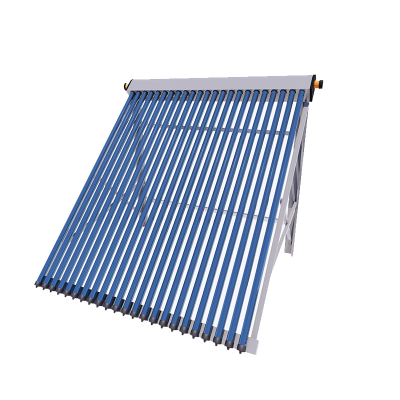
Glazing and frame seals. Check for cracking, water ingress and internal condensation. Persistent condensation between glazing and absorber indicates a breached seal or a blocked ventilation path, and it will reduce output.
Mounting hardware. Check for corrosion and loosened fasteners, particularly on coastal and high-wind sites. Mixed-metal contact at the bracket-to-frame interface is a common source of galvanic corrosion in projects where mounting was sourced separately from the collectors.
New shading. Tree growth, a neighbouring extension, a new rooftop plant unit. This is the cheapest yield loss to find and the most frequently missed.
External pipe insulation. UV-degraded or bird-damaged insulation on the roof run is one of the largest and most under-reported thermal losses in installed systems. Outdoor insulation must be UV-stable, mechanically protected, and rated for solar loop temperatures — not standard heating-grade material.
Soiling matters less than most people expect where rainfall is regular, and considerably more in arid or dusty environments. In desert and industrial locations, define a cleaning interval in the O&M scope rather than leaving it to judgement.
Heat Transfer Fluid: The Component That Decides System Lifetime
If you only enforce one maintenance activity, enforce fluid testing.
Why Glycol Degrades
Solar-grade propylene glycol is supplied with a corrosion inhibitor and buffer package. Under sustained high temperature, thermal-oxidative reactions produce organic acids. The buffer is consumed, pH falls, and the fluid begins attacking exactly what it was supposed to protect — copper, aluminium and soldered joints. Published fluid-manufacturer data consistently shows that degradation rate rises steeply with absorber temperature, which is why stagnation control and fluid life are the same conversation.
The visible symptoms come late. By the time the fluid is dark and sharp-smelling, the inhibitor package is long gone and corrosion products are already circulating.
How Fluid Condition Is Actually Tested
A competent service visit takes a sample from a low point and checks:
Concentration, by refractometer, compared against the commissioning baseline. Drift usually means water top-up after a leak or valve discharge.
pH, against the fluid manufacturer's specified range. A downward trend across visits is more informative than a single reading.
Appearance and odour, as a supporting indicator only.
Some fluid suppliers also offer reserve alkalinity testing, which gives earlier warning than pH alone. If the project is large enough to justify it, ask the fluid supplier whether they provide a sample analysis service.
Replacement Triggers
pH has fallen outside the fluid manufacturer's stated range
Concentration no longer meets the site's freeze protection requirement
The system has experienced repeated stagnation or valve discharge events
The fluid has reached the manufacturer's stated service interval, commonly quoted in the 3–5 year band
Replacement means flushing, not topping up. Adding fresh fluid to a degraded charge dilutes the problem without removing the acids or corrosion products already present.
Pricing an O&M scope for a system you are quoting?
Send us the model or the project outline and we will provide the maintenance manual, the wear-parts list and the commissioning record template.
Hydraulic Loop: Pressure, Expansion Vessel, Air, Pump
System pressure should be read cold and compared against the commissioning record. A slow seasonal decline usually means a weeping fitting or repeated safety valve discharge, not evaporation.
Expansion vessel pre-charge is the item most often skipped and most often the root cause of repeated valve discharge. It must be checked with the vessel isolated and depressurised on the system side, and it must be sized against stagnation conditions rather than normal operating temperature. If the vessel was sized for 90 °C in a system that reaches stagnation every July, the valve will keep opening and the system will keep losing fluid.
Air collects at high points and at the collector manifold. After any overheating event, expect trapped vapour that may persist as an air lock once the system cools. Automatic air separators help; manual vents at every high point are still required.
Pump. Check for noise, for cavitation at high fluid temperature, and for rotor seizure after long idle periods. Pumps are consumables over a 20-year system life and should appear in the spare parts list, not in an emergency purchase order.
Controller and Sensors: Cheapest Parts, Largest Yield Losses
Solar loop sensors are typically PT1000 and cost very little. A drifted or badly positioned sensor is the highest-leverage fault in the whole system, because it silently changes when the pump runs.
At each annual visit, compare collector and tank sensor readings against a calibrated reference. Verify sensor immersion depth and thermal contact — a sensor sitting in a dry pocket without paste will lag reality by several degrees. Then confirm the differential on/off setpoints and maximum tank temperature have not been altered by a well-meaning site technician, and export the controller's operating log if the unit supports it.
Document setpoints in the O&M file. On multi-year projects, undocumented setpoint changes are a recurring source of disputes about whether a system "underperformed".
Storage Tank: Anode, Scale, and Hygiene Constraints
For enamelled steel tanks, the sacrificial magnesium anode is a wear part. Common practice is inspection every one to two years, with replacement when a substantial share of the anode has been consumed; the correct interval depends on water chemistry and on the tank manufacturer's instructions. In systems with impressed-current anodes, verify that the unit is powered and functioning — it fails silently.
Scale should be assessed on the heat exchange surfaces, not just in the tank body. In hard water, a plate exchanger on the DHW side can lose meaningful capacity within a few years without any visible symptom other than reduced delivery temperature.
Hygiene is a design constraint that shows up as a maintenance obligation. Solar preheat tanks can sit in the temperature band where Legionella proliferates, which is why European practice — reflected in codes such as DVGW W 551 in Germany — sets storage and circulation temperature requirements for larger domestic hot water installations. Requirements vary by country and by system size, so confirm the applicable local rule during design. In practice this usually means a thermal disinfection strategy or a flow-through configuration rather than an untreated warm buffer.
Hospital and hotel projects should treat this as a specification item rather than an operational afterthought; the load-side implications are covered across our commercial solar hot water systems range.
What Solar Thermal Maintenance Costs, and How to Scope It
Absolute figures vary too widely by market and labour rate to quote responsibly. What you can control is scope definition. A defensible O&M scope separates:
| Cost line | Typical structure | Notes for tender documents |
|---|---|---|
| Annual inspection visit | Fixed price per visit | Must include the sensor cross-check and pressure record, not just a visual walk-round |
| Fluid testing | Fixed price per sample | Cheap. The false economy of skipping it is expensive |
| Fluid replacement | Periodic, condition-based | Scales with loop volume; budget as a multi-year provision, not a surprise |
| Wear parts | Consumption-based | Pump, sensors, seals, valves, anode — should be a named list agreed at handover |
| Corrective call-outs | Variable / rate card | Where undefined scopes generate disputes; agree response times and hourly rates up front |
For tenders, ask bidders to price the annual visit and the fluid replacement provision separately. A bid that omits the fluid provision is not cheaper — it has just moved the cost to year four.
Field Diagnosis Table: Symptom → Likely Cause → First Check
| Symptom | Likely causes, in rough order of field frequency | First check |
|---|---|---|
| Yield down, system appears to run normally | Sensor drift or poor sensor contact; altered setpoints; partial air lock; new shading | Cross-check sensors against a calibrated thermometer; read setpoints against the commissioning record |
| Safety valve discharges repeatedly | Expansion vessel pre-charge lost, or vessel undersized for stagnation; recurring stagnation | Check pre-charge with the vessel isolated; recalculate vessel volume for stagnation conditions |
| Pressure falls every season | Small leak at fittings; valve discharge; water top-up masking the trend | Log the cold pressure reading each visit; inspect fittings and the discharge pipe outlet |
| Pump noisy or not circulating | Air in the loop; cavitation; rotor seized after idle period; pump installed on the hot side | Vent high points; verify the pump sits on the return side downstream of the vessel connection |
| Fluid dark, acidic odour | Thermal degradation from stagnation exposure | Test pH and concentration; plan a full flush and replacement |
| Complaints only at peak draw-off | Undersized storage, poor stratification, or backup control schedule — not necessarily a collector fault | Review the demand profile and backup heater logic before touching the array |
Use this as a first-response sheet for site technicians. It is not a substitute for the manufacturer's troubleshooting documentation.
What to Require From the Supplier Before the Order
Maintenance cost is largely decided at procurement. Buyers should compare suppliers on these points, not only on price per square metre.
Documentation
Ask for the installation manual, the O&M manual with defined service intervals, the commissioning record template, and collector test documentation matching the exact model code quoted. Certification under schemes such as Solar Keymark, based on EN ISO 9806 test methods, is a reasonable entry requirement for European projects — but check the report references the model you are buying, not a related variant.
Spare parts and open components
Confirm the named wear-parts list and the expected availability period. Prefer systems built on widely available components — standard PT1000 sensors, common pump station formats, standard hydraulic connections — over proprietary parts that lock the site into a single source.
Fluid specification
Ask which heat transfer fluid the warranty assumes, its temperature rating and its stated service interval. A supplier who cannot answer this has not thought about year five.
Warranty conditions and engineering response
Read what voids the warranty. Conditions tied to maintenance records are reasonable; conditions never communicated at order stage are a warning sign. For project work the practical test is simple: send a real load profile and see whether you get a sized proposal with assumptions stated, or a catalogue.
How this maps to working with Soletks
We work to the same criteria on the supply side — model-specific documentation, standard-component pump stations and controls, a defined wear-parts list, and engineering support during sizing and commissioning rather than only at quotation. For distributors and EPC partners building a long-term service position in their market, that support structure usually matters more than unit price.
These principles form the basis of our solar thermal distribution partnerships with channel partners in Europe, the Middle East and Africa.
The Handover Package That Prevents Most Warranty Disputes
Insist on receiving, and archiving, the following at commissioning. Three pages of records routinely settle arguments that would otherwise take a site visit and a lab test to resolve.
Fluid and hydraulic baseline
Fluid type, batch, concentration and baseline pH
Cold static pressure and normal operating pressure
Expansion vessel pre-charge, measured and recorded
Safety valve set pressure and discharge routing
Control and asset records
All controller setpoints, differentials and delays
Sensor positions and verified readings at handover
As-built hydraulic schematic
Named wear-parts list with part numbers and sourcing route
Frequently Asked Questions
How often should a solar thermal system be serviced?
An annual inspection is the common baseline for commercial closed-loop systems, supplemented by periodic remote checks of yield and circuit pressure. Systems that experience frequent stagnation, operate in dusty environments, or serve critical hot water loads justify more frequent attention. Always confirm the interval against the manufacturer's O&M documentation.
How often does the glycol need to be replaced?
Replacement should be condition-based, triggered by pH falling outside the fluid manufacturer's range or by concentration no longer meeting the site's freeze protection requirement. Many solar-grade propylene glycol products carry a stated service interval in the three-to-five-year range as a time-based backstop, but a system with repeated stagnation events can degrade fluid faster than that.
What happens if the heat transfer fluid is not maintained?
As the inhibitor package is consumed, the fluid turns acidic and begins corroding copper, aluminium and soldered joints inside the loop. Corrosion products then foul pumps and heat exchanger surfaces. The repair cost at that stage is significantly higher than the cost of routine testing.
How long does a solar thermal system last?
Collectors and storage tanks are long-life items when correctly specified and installed. Pumps, sensors, seals and heat transfer fluid are wear items with shorter replacement cycles. Realistic lifecycle planning treats the system as a long-life core with a defined set of consumables, rather than as a single 20-year asset.
Can site staff carry out the maintenance themselves?
Visual inspection, pressure gauge readings, shading checks and yield monitoring are reasonable in-house tasks. Fluid testing and replacement, expansion vessel pre-charge checks, safety valve testing and electrical work should be handled by qualified technicians, both for safety reasons and because warranty terms often require documented professional service.
Does regular maintenance actually extend system life?
It changes the failure mode. Most catastrophic solar loop failures begin as small, detectable conditions — a lost expansion vessel pre-charge, a drifting sensor, a fluid pH trending down. Annual inspection converts those into scheduled minor work instead of unscheduled major repair.
Do PVT and hybrid systems need different maintenance?
The thermal side follows the same logic: fluid, pressure, air, sensors. The electrical side adds standard PV maintenance items such as connector and string checks. Because the photovoltaic layer continuously converts part of the incident energy, hybrid panels typically operate at lower absorber temperatures than pure thermal collectors under no-flow conditions, which is generally favourable for fluid life.
Reviewing a Solar Thermal Design or Service Scope?
Share the collector area, storage volume, seasonal load profile and site location, and our engineering team will comment on the maintenance implications — stagnation strategy, fluid selection and wear-part planning — before the specification is fixed.
Specifications, service intervals and commercial terms are confirmed per project and per selected model. Technical documentation available on request.