Chinese
 Español
 Francés
 Deutsch
 Русский
 العربية
 Português
 日本語
 한국어
 Italiano

PVT Solar Panels Explained: How One Roof Module Produces Both Electricity and Hot Water
PVT Solar Panels: How One Module Delivers Both Electricity and Heat
A technical and commercial guide for project developers, EPC contractors, and procurement teams evaluating hybrid solar PVT systems for buildings, factories, and district energy projects.
What Is a PVT Solar Panel?
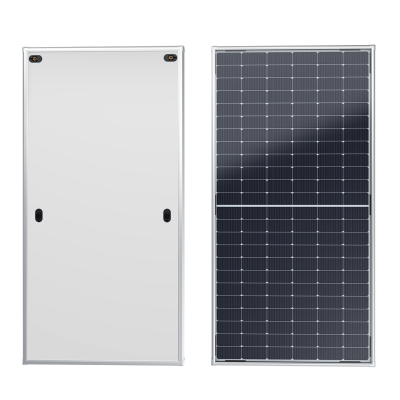
A PVT (photovoltaic-thermal) solar panel is a hybrid module that generates electricity and captures thermal energy simultaneously from the same surface area. Unlike a standard PV module that converts roughly 20% of sunlight into electricity and wastes the rest as heat, a PVT panel recovers that thermal energy through a built-in heat exchanger and channels it into a hot water or heating loop.
The result is a single rooftop unit that delivers two energy outputs — electricity and heat — with a combined system efficiency of 70% to 88%, depending on design, climate, and integration strategy. This makes PVT technology particularly relevant for projects where both electrical and thermal loads exist side by side, such as hotels, hospitals, factories, schools, and multi-family housing.
Key distinction: PV panels produce electricity only. Solar thermal collectors produce heat only. PVT panels produce both from the same footprint — reducing total roof area requirements by up to 40% compared to separate PV + thermal systems.
How Does a PVT Panel Work?
A PVT module consists of a photovoltaic cell layer bonded to or thermally coupled with a heat-absorbing substrate. Sunlight strikes the PV cells, generating electricity. The portion of solar radiation that the PV cells cannot convert — typically 70–80% of the total — becomes waste heat. In a conventional PV panel, this heat raises cell temperature and reduces electrical efficiency. In a PVT panel, a heat-transfer medium (water, glycol, or air) flows through channels beneath or behind the PV cells, absorbing this thermal energy and carrying it away.
This dual-function design creates a feedback loop: extracting heat from the PV cell surface keeps cell temperatures lower, which improves electrical conversion efficiency. Meanwhile, the thermal circuit collects usable heat at temperatures between 25°C and 75°C, depending on the system architecture and flow rate.
Three Core Subsystems
PV Layer
Monocrystalline or polycrystalline cells convert sunlight into DC electricity. Cell efficiency typically ranges from 20% to 23.3%, with output measured in watts peak (Wp).
Thermal Absorber
A metal plate (copper or aluminum) with embedded fluid channels sits directly beneath the PV cells. It absorbs waste heat and transfers it to the circulating medium via conduction.
Heat Transfer Circuit
A closed-loop piping system circulates water or glycol through the absorber, moves the collected heat to a storage tank or heat exchanger, and returns the cooled fluid to the panel.
Control System
Sensors monitor panel temperature, fluid temperature, and flow rate. A controller activates the circulation pump when useful heat is available and shuts it down during low-irradiance periods.
PVT by the Numbers
Types of PVT Panels: Which Architecture Fits Your Project?
Not all PVT panels are the same. The choice between types depends on whether your project prioritizes electricity generation, thermal output, or a specific temperature range for process heat or heat-pump integration.
PVT-E Type: Electricity-First Hybrid
PVT-E panels are designed for projects where electrical savings are the primary economic driver. The thermal absorber serves as a secondary benefit — cooling the PV cells to maintain peak electrical performance while delivering moderate hot water output. This type is well-suited for commercial buildings, office parks, and grid-connected projects where feed-in tariffs or self-consumption savings dominate the financial model.
PVT-T Type: Thermal-First Hybrid
PVT-T panels emphasize thermal collection. The absorber design maximizes heat capture, and the system delivers higher water temperatures at the expense of slightly lower electrical output. This type fits hotels, hospitals, dormitories, and food-processing facilities with significant hot water demand.
TP/V Pro: Next-Generation Integrated Module
The TP/V Pro represents the latest evolution in PVT design, featuring upgraded thermal management and advanced cooling architecture. It targets projects that need both high electrical conversion and robust thermal output — such as district energy systems, industrial campuses, and hybrid heat-pump installations.
PVT Panel Comparison: Soletks Product Line
| Parameter | PVT-E Type | PVT-T Type | TP/V Pro |
|---|---|---|---|
| Primary Focus | Electricity generation | Thermal collection | Balanced dual output |
| PV Cell Efficiency | 23.3% | 20–22% | 23.3% |
| Peak Thermal Efficiency | ~55% | ~71% | 71% |
| Total System Efficiency | ~75% | ~85% | 88% |
| Module Power (Wp) | ~340 W | ~300 W | 336.3 W |
| Max Hot Water Temp | ~55°C | ~75°C | 75°C |
| Operating Range | -25°C to +70°C | -25°C to +80°C | -25°C to +80°C |
| Dimensions (mm) | 1800 × 1080 × 35 | 1800 × 1080 × 45 | 1800 × 1080 × 48 |
| Weight | ~32 kg | ~36 kg | 38 kg |
| Connector Type | MC4 | MC4 | MC4 |
| Best Fit | Grid-connected commercial, office parks | Hotels, hospitals, dormitories | District energy, industrial, heat-pump systems |
Soletks TP/V Pro — Flagship PVT Module
Integrates solar power generation, heating, energy storage, and EV charging support into a single platform. Engineered for large-scale commercial and industrial deployment.
PVT vs. Standard PV vs. Solar Thermal: When Does PVT Make Sense?
Choosing PVT over standalone PV or standalone solar thermal is not automatic. The decision should be driven by the building's load profile, available roof space, and energy cost structure.
Choose Standard PV When:
The building has minimal hot water or heating demand. Electricity self-consumption or export is the sole financial driver. Roof area is not constrained. Examples include warehouses, data centers, and cold-storage facilities.
Choose Solar Thermal When:
The project needs high-temperature heat (above 80°C) for industrial processes. There is no meaningful electrical load. Maximum thermal efficiency per square meter is the priority. Examples include food drying, textile processing, and chemical preheating.
Choose PVT When:
Both electrical and thermal loads exist in the same building. Roof space is limited and must deliver dual output. Heat-pump integration is planned (PVT provides the ideal low-temperature source). Examples include hotels, hospitals, schools, factories with dormitories, and district heating networks.
Avoid PVT When:
Process heat requirements exceed 80°C and no heat pump is in the loop. The building has no hot water demand. Budget constraints require the lowest upfront cost per watt of electricity only.
PVT + Heat Pump: The High-Efficiency Combination
One of the strongest commercial cases for PVT technology is its integration with heat pumps. A PVT panel produces thermal output in the 25–55°C range, which is the ideal source temperature for a water-source heat pump. By feeding PVT thermal output into the heat-pump evaporator, the system achieves COP (Coefficient of Performance) values significantly higher than air-source alternatives, especially in cold climates.
The integration logic follows a clear priority chain: PVT panels collect solar heat and generate electricity during the day. The thermal output feeds a buffer tank or directly into the heat-pump source side. The heat pump lifts the temperature to the required setpoint (typically 55–65°C for domestic hot water or space heating). A backup boiler (gas or electric) handles peak loads or extended cloudy periods. Meanwhile, the electrical output from the PVT panels offsets the heat pump's electricity consumption, creating a near-self-powered heating loop.
System-level benefit: PVT + heat pump systems can reduce a building's total heating energy consumption by 40–60% compared to conventional boiler-only systems, while simultaneously generating electricity that offsets compressor power draw. Research indicates these combined systems can deliver up to 45% solar coverage of total heat demand.
Planning a PVT + heat pump project? Our engineering team provides free thermal load calculations and system configuration recommendations.
Get a System QuoteApplication Scenarios for PVT Solar Panels
Commercial Buildings: Hotels, Hospitals, Schools
These facilities combine significant electrical loads (lighting, HVAC, equipment) with continuous hot water demand (guest rooms, kitchens, laundry, sterilization). PVT panels address both simultaneously, reducing the total number of rooftop units and simplifying the balance-of-system. A 100-room hotel, for example, may need 3,500–5,000 liters of hot water per day at 50°C. A PVT array sized for this thermal load will also generate meaningful electricity — typically enough to offset 15–30% of common-area electrical consumption.
Factory Dormitories and Worker Housing
Industrial campuses with on-site dormitories have a dual energy profile: the factory floor needs process electricity, while the dormitory block needs domestic hot water at 40–55°C. PVT panels installed on dormitory rooftops serve both loads. At a consumption benchmark of 50–75 liters per person per day, a 500-worker dormitory requires approximately 25,000–37,500 liters of daily hot water. The PVT electrical output can feed back into the factory's distribution grid, reducing peak demand charges.
District Heating and Multi-Building Campuses
For projects involving multiple buildings — university campuses, military bases, residential districts — PVT arrays can feed into a centralized thermal network. The low-to-medium temperature output integrates naturally with district heating systems that operate at 40–60°C supply temperatures. Combined with seasonal thermal storage, PVT-based district systems have demonstrated year-round solar fractions above 50% in Central European climates.
Industrial Process Preheating
Factories with process heat requirements below 80°C can use PVT panels to preheat incoming water or feedstock before it enters a conventional boiler or heat exchanger. This reduces boiler fuel consumption by 30–50% in favorable climates. Typical applications include food and beverage processing, textile washing, pharmaceutical preparation, and chemical dilution. The electrical output simultaneously offsets pumping, lighting, or compressed-air system loads.
Sizing a PVT System: Key Inputs
Proper PVT sizing is not guesswork. It requires four primary inputs: daily thermal load (calculated from hot water demand, temperature rise, and usage pattern), daily electrical load (or target offset percentage), available roof area (accounting for tilt, orientation, and shading), and local solar irradiance data (annual GHI and monthly distribution).
The thermal load calculation follows the same formula used for all solar thermal systems: Q (kWh/day) = 1.163 × V (m³) × ΔT, where V is the daily hot water volume in cubic meters and ΔT is the temperature rise from inlet to setpoint. Once Q is known, the required collector area is determined by dividing Q by the daily solar yield per square meter (which depends on irradiance, panel efficiency, and solar fraction target).
The electrical sizing is additive: the total PVT array area, once determined for thermal load, will produce a calculable amount of electricity based on the module's Wp rating and local peak sun hours. If the electrical output is insufficient, additional standard PV panels can supplement the array without affecting the thermal design.
Rule of thumb: In regions with 1,400–1,800 kWh/m² annual irradiance, a TP/V Pro module (336.3 Wp, 71% peak thermal efficiency) will produce approximately 500–650 kWh of electricity and 800–1,100 kWh of thermal energy per year. Actual output depends on tilt, shading, and integration design.
Financial Model: ROI and Payback for PVT Systems
The financial case for PVT rests on dual revenue streams: electricity savings (or export income) plus thermal savings (fuel displacement). This dual-benefit structure typically delivers a faster payback than either standalone PV or standalone thermal systems, provided both loads genuinely exist in the project.
A simplified annual savings model for a commercial PVT installation looks like this: annual electricity savings = PVT electrical output (kWh) × local electricity price ($/kWh), plus annual thermal savings = displaced fuel volume × fuel unit price. Total annual savings minus annual O&M cost gives the net annual benefit. Payback period = total system cost ÷ net annual benefit.
For projects in mid-latitude regions (Southern Europe, Middle East, Southeast Asia, Latin America), payback periods for well-designed PVT systems typically fall between 4 and 7 years, depending on local energy prices and incentive availability. The key driver is the electricity-to-fuel cost ratio: the higher the electricity price relative to gas or diesel, the more PVT outperforms standalone thermal.
Quality Assurance and Certifications
All Soletks PVT panels undergo more than 160 quality inspection steps, from selective coating adhesion testing to hydraulic pressure resistance and thermal cycling. The product line holds ISO 9001 (quality management), ISO 14001 (environmental management), ISO 45001 (occupational health and safety), and Solar Keymark certification — the European standard for solar thermal product performance.
Every module is tested under controlled conditions to verify rated electrical and thermal output. Production is monitored via a DCS (Distributed Control System) to ensure batch-to-batch consistency. Soletks backs its PVT panels with a comprehensive warranty and lifetime technical support, including remote monitoring, installation guidance, and on-site commissioning for key projects.
Frequently Asked Questions
Ready to Evaluate PVT for Your Next Project?
Send us your project parameters and our engineering team will provide a free system design, thermal load calculation, and ROI projection.
Related Resources
PVT-E Type Solar Panel — Product Page
PVT-T Type Solar Panel — Product Page
TP/V Pro Type Solar Panel — Product Page
Flat Plate Solar Collector — Product Page
Centralized Solar Heating Solutions
Contact Soletks — Request a Consultation