Chinese
 Español
 Francés
 Deutsch
 Русский
 العربية
 Português
 日本語
 한국어
 Italiano

PVT Solar Panels Price: Cost Drivers, Market Ranges and ROI
PVT Solar Panels Price: Cost Drivers, Market Ranges and ROI
Compare PVT by delivered system scope, not panel-only unit price. €420 vs €690 headline panels can have an 8% real delivered difference once controls, hydraulics, mounting and freight are normalized.
Why "What Do PVT Panels Cost?" Is the Wrong Opening Question
A facility manager in Madrid receives three quotations — €420, €580, €690 per panel. The obvious choice is €420. Eighteen months later they discover Supplier A's quote excluded the hydraulic kit, the differential controller, the pump, the mounting frame, and freight — and Supplier C's quote included all of those plus a 10-year combined-output warranty. The real delivered cost difference is closer to 8%, not the 64% the headline panel prices suggested. This guide gives the framework to spot that difference before the PO is signed.
Key Takeaways
The price logic in five lines
PVT panel headline price varies roughly 2× across the market; delivered system price varies far less once controls, hydraulics, mounting and freight are normalized.
Air-based PVT (e.g. APVT-590) typically prices 10–25% above an equivalent-wattage PV-only module; liquid-based PVT (e.g. T-type 500W) typically prices 30–60% above for the same electrical Wp.
The PVT premium is justified when (a) roof area is constrained, (b) the building has a real low-temperature heat load matched to solar hours, and (c) baseline electricity and fuel costs are above ~€0.10/kWh equivalent.
ROI must count electricity savings + fuel savings separately. A 20-panel APVT-class field typically pays back the PVT premium over PV-only in 2–4 years when both outputs are used.
Quote normalization — same scope, same Incoterms, same warranty term — is the single biggest cost-control lever in a PVT RFQ.
TL;DR
Quick Verdict
PVT solar panel price should be compared by delivered system scope, not by panel-only unit price. A useful quotation separates PV nameplate Wp, thermal output (Wth or kWh/day), heat-transfer circuit (air or liquid), controls, mounting, packing, freight, warranty and documentation. A low panel-only price almost always becomes expensive once the buyer adds heat exchangers, pumps, sensors, mounting frames and export packing later.
The fastest way to compare suppliers is to normalize every offer into price per Wp, price per m², stated thermal output basis, and delivered boundary (EXW / FOB / CIF / DDP).
For Soletks paths, compare the PVT solar panel category, the PVT T-type hybrid system (500 W PV + 1,380 W thermal peak), the APVT-590 air-based PVT panel (590 Wp, 23.3% efficiency, 1,551 Wth peak, N-type TOPCon, −0.28%/°C), the PVT solar panels guide, and the Soletks project inquiry page.
Electricity side
Heat side

Dual-output scope
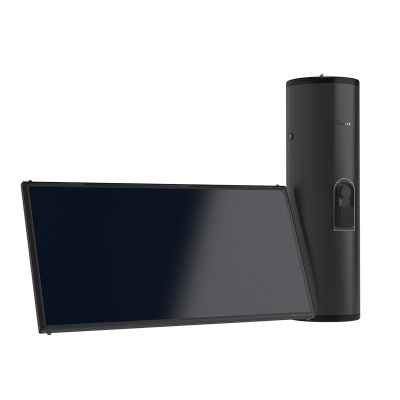
T-type PVT should be priced against both electrical watts and usable heat, not PV watts alone.
The premium only makes sense when the project can use the thermal output, because the panel is carrying absorber, heat-transfer and control requirements in one roof surface.
Why PVT Price Is Different from PV Price
PVT price is different from PV price because the product sells electricity and usable heat from the same roof area. A PV quote mostly compares electrical nameplate power. A PVT quote must compare both sides — electrical and thermal — with a single delivered boundary that includes the heat-transfer hardware.
| Price item | PV-only quote | PVT quote | Why it changes price |
|---|---|---|---|
| Electrical output | Wp and module efficiency | Wp + operating temperature behavior | Cell temperature management is part of PVT value |
| Thermal output | None | Wth + airflow (m³/h) or flow (L/min) | Heat exchanger adds material and assembly |
| Absorber / heat path | None | Aluminium, copper or air channel | Thermal contact quality changes cost |
| Pump or fan | Not included | Included in many liquid systems | Circulation requires controls |
| Sensors and controller | Limited | Temperature, flow, ΔT control | Heat side needs measurement and protection |
| Mounting | Module rail | Module + hydraulic access | Service clearance and pipe routing |
| Documentation | PV datasheet | PV + thermal test reports | Dual output requires two evidence sets |
The value case rests on roof-area productivity: a single roof field produces both electricity and useful heat instead of forcing the buyer to choose between PV modules and solar thermal collectors — or to install both on separate roof areas. For roof-constrained projects this is often decisive; for roof-rich ground-mount projects it often is not.
PVT Price Market Reference Ranges
Buyers searching for "PVT solar panels price" generally need a reference range first. The table gives 2025 market screening bands for the three main product classes — not Soletks quotations, but the bands typical project-quantity buyers see in international RFQs.
Ranges below are panel-only EXW China at project quantities of 20+ units. Small LCL shipments, DDP destinations, and certified-market sales (Solar Keymark, UL) push the upper bound higher. Heat-transfer kit (pump, controller, sensors) adds €600–€2,500 per project — not included in the per-panel band. Request a project-specific quote through the Soletks contact page.
| PVT class | Typical $/Wp electrical | Thermal premium over PV-only | When this class wins |
|---|---|---|---|
| Air-based PVT (APVT-590) | 0.45–0.70 USD/Wp | +10–25% | Drying, ventilation preheat, heat-pump source air |
| Liquid-based PVT (T-type, covered) | 0.65–1.20 USD/Wp | +30–60% | DHW, heat-pump cold-side preheat, low-T process |
| High-efficiency hybrid (TPV-PRO) | 0.85–1.50 USD/Wp | +50–90% | Roof-constrained projects valuing both outputs at premium |

Lower-premium class
APVT-590 is the price-sensitive PVT option when warm air is useful on site.
Because the thermal side uses an air channel and duct interface rather than a pressure-tested glycol manifold, the premium over PV-only is usually easier to justify.
Cost Drivers Buyers Should Compare
The biggest PVT price drivers are quantity, thermal design, controls scope, certification, logistics and warranty. The index table uses 100 as a neutral baseline (a project-quantity panel-only offer at standard scope).
| Cost driver | Low-complexity | Higher-complexity | Index movement |
|---|---|---|---|
| Quantity | 50+ panels | 1–10 sample panels | 85 → 130 |
| Thermal path | Air-based channel (APVT-590) | Liquid HX (T-type) | 95 → 125 |
| Controls | Basic ΔT controller | Sensors, pump, BMS Modbus | 100 → 135 |
| Mounting | Standard pitched-roof rail | Custom tilt or façade frame | 100 → 140 |
| Documentation | Datasheet only | Solar Keymark + test reports | 100 → 120 |
| Freight | Full 40 ft container | Small LCL shipment | 90 → 135 |
| Warranty | Standard (10-yr elec, 5-yr thermal) | Project-specific extended | 100 → 125 |
Quantity changes price because set-up, packing and export administration spread across more units. Liquid PVT costs more than air-based at the same Wp because sealed manifolds, pressure testing, glycol-compatibility materials and heat-exchange components add cost. Custom mounting frames raise price because fabrication tolerances and wind-load engineering must match the exact roof or façade — no scale economy.
Quote Normalization Calculation
A buyer should normalize every PVT quote before deciding which supplier is cheaper. The example uses index points; replace each with quoted currency amounts when offers are in hand.
Delivered total = panels + hydraulic + mounting + freight
  20 × 100 + 240 + 180 + 160 = 2,580 index

Per Wp = 2,580 ÷ 11,800 = 0.219 index/Wp
Per m² = 2,580 ÷ 52.6 = 49.0 index/m²
| Input | Value |
|---|---|
| PVT panels | 20 units |
| Electrical rating per panel | 590 Wp (APVT-590) |
| Total PV nameplate | 11,800 Wp |
| Total panel area | 52.6 m² |
| Panel-only quote | 100 index/panel |
| Hydraulic + ΔT control kit | 240 index |
| Mounting + accessories | 180 index |
| Export packing + freight | 160 index |
| Delivered system total | 2,580 index |
| Normalized per Wp | 0.219 index/Wp |
| Normalized per m² | 49.0 index/m² |
When comparing Supplier A to Supplier B, both numbers must be recalculated against the same scope. The supplier with the lower headline panel-only number frequently moves to the higher delivered total once excluded items are added back.
ROI Inputs for PVT
PVT ROI should count electrical value and heat value separately, then subtract the extra balance-of-system cost over a PV-only baseline. The example uses a 20-panel APVT-590 class field (≈ 12,000 Wp PV, ≈ 52 m² aperture) on a temperate-climate roof with a year-round low-temperature heat load.
| ROI input | Example value |
|---|---|
| Annual PV output (12 kWp × ~1,150 kWh/kWp) | 14,000 kWh/year |
| Annual useful heat (52 m² × ~350 kWh/m²·yr) | 18,000 kWh/year |
| Electricity tariff | 0.12 €/kWh |
| Thermal fuel value | 0.06 €/kWh |
| Annual electrical value | 1,680 €/year |
| Annual thermal value | 1,080 €/year |
| Combined annual value | 2,760 €/year |
| Extra PVT cost over PV-only | 6,500 € |
| Incremental payback over PV-only | 2.36 years |
Two warnings. First, "useful heat" must reflect heat the building actually consumes during solar hours — a drying facility running 8 months matches APVT-590 output well; a heating-only office with summer-only surplus does not. Second, the fuel-value figure should reflect the displaced energy: if the heat replaces resistive electric heating at 0.12 €/kWh rather than gas at 0.06 €/kWh, the thermal value doubles and payback drops to ~1.4 years.
When PVT Does NOT Pay Back
Walk away from the PVT premium in three cases: (1) No real summer heat load — a pure space-heating building gets the PV value but almost no thermal value; pay the PV-only price. (2) Roof-rich ground-mount projects — with 5,000 m² of empty ground, install PV-only plus a separate thermal field. (3) Very low energy tariffs — below ~€0.06/kWh with subsidized fuel, the thermal output value is too small to clear the premium inside 6–8 years.
The reverse is also true: roof-constrained residential and small-commercial projects in Europe and Mediterranean climates with €0.20+/kWh electricity and a year-round heat use case are where PVT delivers its strongest economics — often beating both PV-only and standalone thermal on a per-m² basis.
PVT vs PV + Solar Thermal vs Thermal-Only
| Option | Roof use | Service life | Cost vs PV-only | Stronger fit |
|---|---|---|---|---|
| PV-only (standard module) | Electrical only | 25–30 yr | Lowest electrical-only scope | Power-led, ground-mount, large rooftops |
| PVT air-based (APVT-590) | Electrical + warm air | 15–25 yr | +10–25% | Ventilation preheat, drying, heat-pump air |
| PVT liquid-based (T-type) | Electrical + water/glycol heat | 15–25 yr | +30–60% | DHW, heat-pump preheat, low-T process |
| PV + separate flat-plate thermal | Two roof zones | 25–30 / 15–25 yr | Two procurement processes | High thermal duty, mid-T process heat |
| Solar thermal only | Heat only | 15–25 yr | No electrical output | Hot-water-led projects, no electricity need |
PVT wins on roof-area productivity when the buyer needs both outputs from the same surface. PV + separate solar thermal wins when the buyer has roof area and wants each system optimized independently. The TPV-PRO hybrid module reaches ~88% combined instantaneous efficiency (20% electrical + 68% thermal at 800 W/m²) — useful where both outputs are valued at premium tariffs and the roof boundary is the binding constraint.

ROI fit
High-efficiency PVT pays back best when the roof boundary is tight and both outputs have value.
If the site only needs electricity, PV-only wins. If it can use electricity and heat at premium tariffs, combined output improves the economics per square metre.
Specifications That Change Price
| Specification | Unit to request | Why it changes price |
|---|---|---|
| Electrical nameplate | Wp per panel and total kWp | Sets PV capacity |
| Module efficiency | % at STC | Sets roof productivity |
| Temperature coefficient | %/°C (lower is better) | Affects hot-climate output |
| Panel area | m² gross and aperture | Sets density per roof m² |
| Thermal output | Wth peak + kWh/day | Sets heat value |
| Working fluid or airflow | L/min (liquid) or m³/h (air) | Changes pump/fan sizing |
| Static pressure | Pa (air) or bar (liquid) | Sets fan/pump curve |
| Controller scope | Sensors + outputs (Modbus, dry contact) | Changes integration cost |
| Packing size | Pieces per pallet / container | Changes freight cost |
| Warranty | Years, electrical vs thermal | Changes risk allocation |
Requesting the same units across all quotes prevents false savings. A panel without a stated thermal output basis is not a comparable PVT product — it is a PV module being sold as a PVT panel.
Standards and Documents to Request
PVT buyers should request both PV-side and thermal-side documents because the hybrid product crosses two technical categories: IEC 61215 (PV module design qualification), IEC 61730 (PV module safety), IEC 61853 (PV performance testing across temperature and irradiance), UL 61730 (North American PV safety), ISO 9806 (solar collector thermal performance), EN 12975 (legacy solar thermal reference), Solar Keymark (European certification), and ISO 9001 (supplier quality management).
For source documents, buyers can use IEC renewable energy resources, ISO 9806, and the UL PV module testing and certification page.
RFQ Inputs for Soletks
A useful PVT RFQ gives Soletks the energy target, roof constraint and quotation boundary at the same time.
Include the following in your inquiry
Submit the inquiry through the Soletks contact page and request a PVT quotation in a normalized format. A useful reply should compare panel count, roof area, electrical output, thermal output, control scope and delivery boundary in one table — before the bottom-line price is judged.
Specification Checklist
| Specification item | Required value |
|---|---|
| PVT model | Model name and class (air / liquid / hybrid) |
| Electrical rating | Wp per panel and total kWp |
| Module efficiency | % at STC |
| Temperature coefficient | %/°C |
| Panel area | m² gross and aperture per panel |
| Thermal output basis | Wth + kWh/day at stated conditions |
| Circuit type | Air, water or glycol; flow rate and pressure |
| Controller scope | Sensors, pump/fan, communication outputs |
| Mounting scope | Rail, brackets, tilt frame or façade frame |
| Warranty | Years, electrical/thermal coverage, exclusions |
| Packing | Pallet size, container quantity, gross weight |
| Quote boundary | EXW, FOB, CIF or DDP |
Small-Commercial Panel Count Example
A typical small-commercial PVT quote should show panel count, roof area, electrical output and thermal output together. A 20-panel APVT-590 class field gives about 12 kWp of PV and roughly 52 m² of aperture. In a temperate-climate screening case, that order of field can produce around 14,000 kWh/year of electricity plus 18,000 kWh/year of useful low-temperature heat when the building can actually use the warm air or water. The correct count is never "20 by default"; it traces back to roof area, heat schedule, fan or pump design, and the tariff value of both energy streams.
| Input | Screening value | Why it changes the price |
|---|---|---|
| Panel count | 20 APVT-590 class panels | Sets pallet quantity, mounting rows and wiring |
| Roof area | About 60 m² available for 52 m² aperture | Controls row spacing and service access |
| Heat use | DHW preheat, drying, ventilation or heat-pump source air | No heat use means the PVT premium is wasted |
| Controls | Fan/pump, sensors and differential logic | Often quoted outside the panel-only price |
| Delivery boundary | EXW, FOB, CIF or DDP | Changes landed cost more than the panel delta |
The quote boundary matters because a panel-only EXW price can look attractive while excluding hydraulic kit, fan package, controller, sensors, mounting rails, spare parts, freight and certification documents. For ROI comparison, ask suppliers to give the PV-only baseline and the PVT premium as separate lines. Then compare payback on the premium only: electrical value plus heat value minus extra balance-of-system cost. This is also the cleanest way to decide whether PVT, PV-only plus a heat pump, or a separate solar thermal field is the stronger investment.
There are also cases where PVT should be removed from the shortlist. A warehouse with abundant roof space and no useful heat load may be better served by ordinary PV. A site with very cheap gas, very low electricity tariffs or only seasonal heat demand may not recover the hybrid premium within the buyer's target payback window. A good Soletks-style RFQ therefore asks for both the annual electrical load profile and the heat-use schedule; without both, a supplier can only quote hardware, not project economics.
That schedule should identify month-by-month heat demand, because summer thermal surplus can erase the apparent annual gain.
Get a normalized PVT quote — not a headline panel price
Send roof area, target kWp, heat-side use and your electricity/fuel tariffs. Soletks returns electrical + thermal output, control scope and delivery boundary in one comparable table.
FAQ
Q1.Why are PVT solar panels more expensive than PV panels?
Q2.What is a typical price range for PVT solar panels?
Q3.What is the best way to compare PVT solar panel prices?
Q4.Does PVT have a better ROI than PV-only?
Q5.When does PVT NOT make sense?
Q6.What changes PVT solar panels price the most?
Q7.Should I request panel-only price or complete PVT system price?
Q8.How many PVT panels do I need for a small-commercial project?
Sources and Disclaimer
Authority references used in this article include IEC 61215 (PV module design qualification), IEC 61730 (PV module safety), IEC 61853 (PV module performance testing), UL 61730 (North American PV safety certification), ISO 9806 (solar collector thermal performance testing), EN 12975 (legacy solar thermal reference), Solar Keymark (European certification), and ISO 9001 (quality management). Product data referenced for the Soletks APVT-590 are from the published specification: 590 Wp PV nameplate, 23.3% module efficiency, 1,551 W thermal peak, 70–90 m³/h airflow, 120 Pa static pressure, twin Φ100 mm duct interface, 144 N-type TOPCon cells, −0.28%/°C temperature coefficient, 2.63 m² gross area, 37 kg. Product data referenced for the Soletks PVT T-type: 500 W PV nameplate, 1,380 W photo-thermal peak, cell-temperature management to the 25–45 °C optimal band. The TPV-PRO reference of 88% combined instantaneous efficiency (20% electrical + 68% thermal at 800 W/m²) is from Soletks engineering documentation. The price-band figures, ROI worked example and index-point comparisons are early RFQ planning values; final prices and payback should use supplier quotations against project drawings, your actual tariffs, freight terms, local climate, measured heat demand and installation requirements.